 ClientsOpportunities, quotes, product catalogue
 ProjectsPlanning, tasks, sign-off
 ServiceHelpdesk, tickets, retainers, assets
 TeamPeople, absence, time
 MoneyInvoices, e-invoicing, insights
 AgentsLeadtime Agent, your own agents, automation

Ten reasons why your company earns more with Leadtime.
Leadtime brings sales, projects, service, team and invoicing into one system, and agents work inside it. The chaos becomes something you can plan, the same work needs fewer people, and your EBIT goes up.*
What is different
The ten reasons at a glance.
Pick a reason to jump straight to it. From every reason you can come back here.
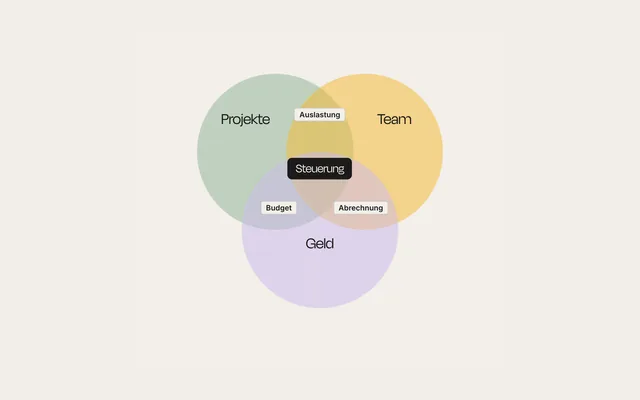

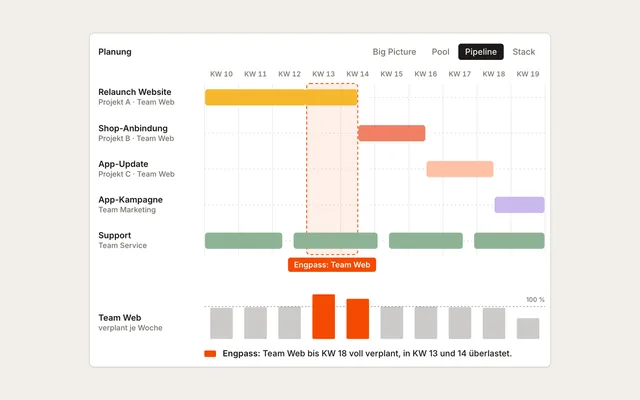
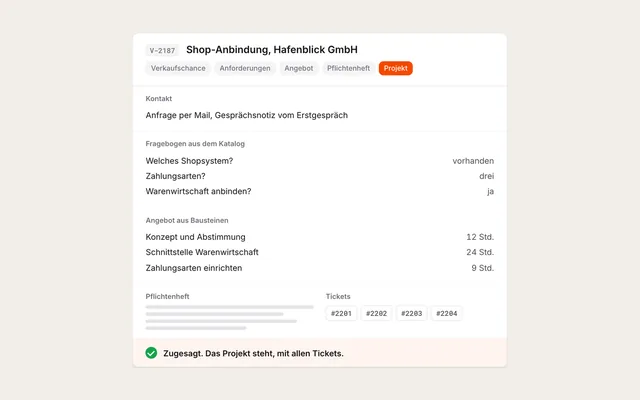
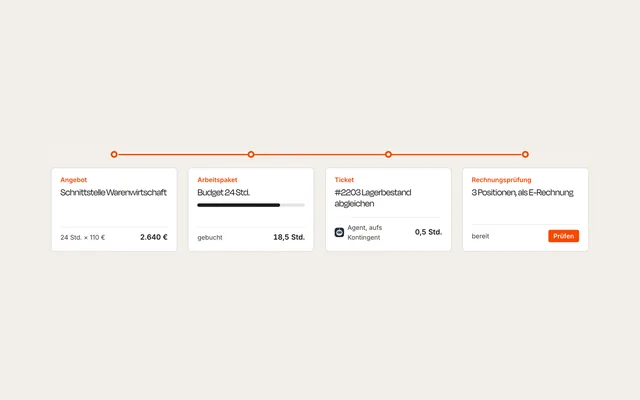
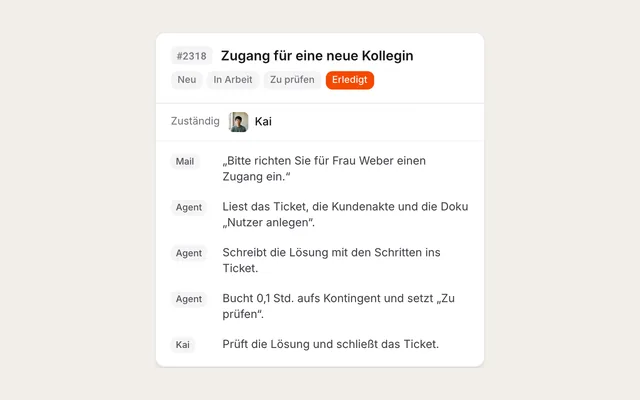
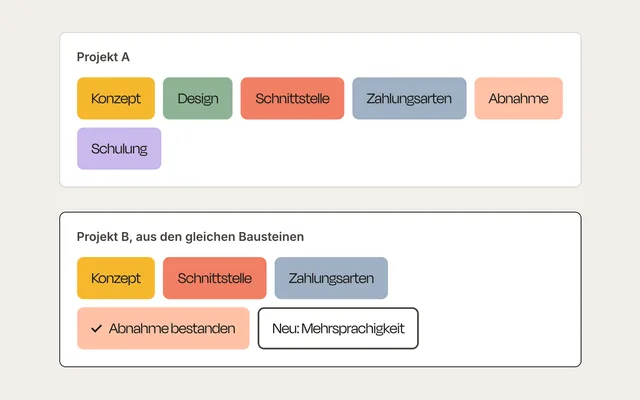

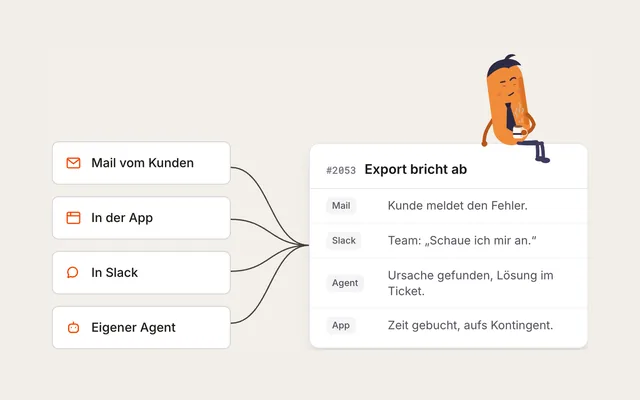
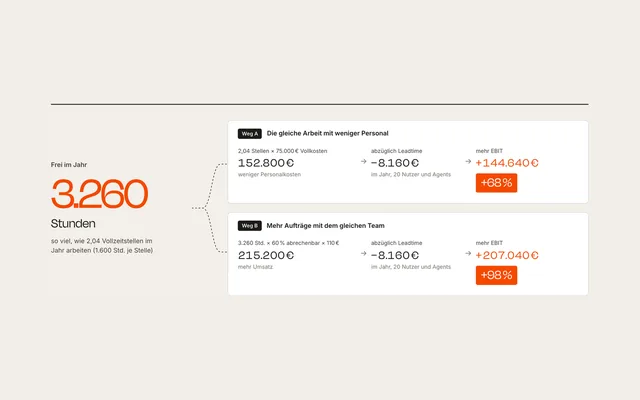

Photo: A managing director sits alone at a large wooden table in her agency, hand at her chin, looking thoughtfully at printed figures.
Managing director of a creative agency
“Why do we make almost nothing on our biggest client?”
The answer: reason 0101
You finally see projects, team and money in the context they belong in.
In many firms, projects, team and money live in separate tools. Project managers can’t see how much of the budget is already used up. Team leads don’t know which project needs people next week. And accounting only finds out at the end of the month what was worked. Everyone decides on their own, and you notice the consequences when it is too late.
In Leadtime the three are connected. When someone logs an hour on a ticket, the project manager sees it in the budget straight away and the team lead sees it in the workload. At the end of the month the hour is ready to invoice. So with every decision you see what it means for the other two areas. That is what we mean by control.
Image: three circles for projects, team and money first stand far apart, each with the question of its area: is the budget still enough? Who has time next week? What hasn’t been billed yet? As you scroll they slide over each other. The overlaps read budget, workload and invoicing, and the middle reads control.
02
You move into a finished building that grows with your company.
Many service firms buy a separate tool for every department. Leadtime is a finished building: each floor is one area, and all of them run off the same service shaft, meaning the same data. When you grow, you move onto the next floor.
- AgentsThe AI layer above everythingMore about agents
- InsightsReports and key figures from every floorMore in the overview
- MoneyFrom work done to invoiceMore about money
- ServiceTickets and support in day-to-day operationMore about service
- ProjectsPlan and deliver reliablyMore about projects
- ClientsFrom first contact to signed jobMore about clients
- TeamThe base: people, time, leave, workloadMore about team
Image: a cut-away office building with six floors and an orange glowing service shaft running through all of them. Floor by floor the lights come on, from the bottom up. At the end an android sits on the edge of the roof.









Photo: A managing director stands at the window with folded arms, looking with concern across the open-plan office where his team works.
Managing director of an IT service provider
“Why does the whole plan wobble as soon as one project runs late?”
The answer: reason 0303
You see the bottleneck before the next deadline slips.
In project business, everything is always on the move. You start with incomplete requirements, take on jobs because you need the revenue, and spend the day reacting. That creates dependencies right across the company that nobody can see.
Your team is working on project A, and project B is due to start. But A takes longer, and the team stays tied up. B starts later, C slips, and the campaign for the app launch moves with it. One delay becomes a whole chain, and what remains is the feeling that everything is getting on top of you.
Leadtime puts all projects, tickets and people into one plan, like a train timetable. Week by week you see who has hours free and where someone is overloaded. You spot the bottleneck before the next deadline slips, and you see where you can save time.
Image in three steps: first, five coloured lines, one per project, are tangled into a knot, with triggers such as incomplete requirements and a new job in between. Then the projects lie side by side as bars over ten weeks. Project A, a relaunch, takes a week and a half longer, the web team stays tied up, and the shop integration, the app update and the campaign for the app launch slip back. The spot is marked as a bottleneck. Finally everything sits in the Leadtime plan, with the web team’s workload per week below it, overloaded in weeks 13 and 14.
04
From the first enquiry to ongoing support, nobody on your team types anything twice.
At many service firms a job passes through five tools, and something gets lost at every handover. The project team asks the client what sales already knew. In Leadtime everything stays one process, from the enquiry to the invoice and ongoing support.
- The enquiry becomes an opportunity.Contact, call notes and needs sit on the client.
- The questionnaire comes from your catalogue.Each service comes with the questions you always ask.
- The answers turn into the quote.Built from the blocks and hours of your services.
- Specification and tickets from the same data.What is in the quote is also in the specification and the tickets.
- The yes already is the project.Nobody retypes anything. Invoicing and support hang off the same job.
Image: a single job grows step by step: opportunity, questionnaire with answers, quote with blocks and hours, specification and tickets, and finally the project. Everything stays in the same job.

Photo: A consultancy partner sits in the meeting room after an appointment, holding a cup in both hands and looking thoughtfully to the side.
Managing partner of a consultancy
“How many hours did we work last month and never bill?”
The answer: reason 0505
Whatever your team works on is ready to invoice at the end of the month.
At many service firms, invoicing is the moment someone pieces hours together from spreadsheets, emails and memory. Whatever slips through, you give away. In Leadtime money runs through the whole process: the quote is priced from the hours of its building blocks, the budget sits on the work package, and time logged on a ticket counts against the retainer, agents’ time included.
At the end of the month you review the finished lines and send the invoice, as an e-invoice if you like. That is why Leadtime is more than a ticket system.
Image: an orange thread connects four stations: the quote with hours times rate, the work package with its budget, a ticket with logged time counting against the retainer, and invoice review with the finished lines.
What you save
An invoice in 5 minutes instead of 40.
The invoice is built from the logged work. Your team only reviews it, at 40 invoices a month.*
280fewer hours a year spent on invoices
8×faster per invoice40 minutes today, 5 minutes with Leadtime

Photo: The owner of an IT systems house leans against a desk, lowers his phone and looks sceptically to the side.
Owner of an IT systems house
“Everyone here uses a different AI. Does anyone actually know what they are doing?”
The answer: reason 0606
You put agents to work across the whole company and always know what they are doing.
In many firms today everyone uses their own AI, in the browser, in the mail client or in the code editor. Nobody knows what it does with client data or how much time it really saves. In Leadtime every agent is a team member with its own account and a role that sets what it may do. It works on tickets and tasks in the same system as your team, every step shows up in the history, and its time goes into billing. If you deactivate it, it is locked out immediately.
That keeps vibe coding under control too, because the coding agent works on the task from the specification.
2 instead of 20 minutesfor a routine ticket handled by an agent, up to 10 times faster. Together with the delivery work agents take on, that is around 1,040 hours a year with 20 people.*Image: a typical flow with an agent in five steps. A client’s email becomes a ticket. The support agent reads the ticket, the client record and your documentation. It writes the solution with the steps into the ticket, logs six minutes against the retainer and sets the ticket to “To review”. Kai from support checks the solution and closes the ticket.
 Kai
Six ways agents can work with you
- Leadtime AgentBuilt in, in the chat next to every view. It answers from your tasks, times and projects and only shows what you are allowed to see anyway.
- AutomationsA job in your own words, carried out by an agent. It starts on a schedule, when something is created, on a Slack message or a webhook.
- MCPClaude, Codex or Cursor sign in to Leadtime and reach the whole public API, with the rights you give them.
- Coding agentsCursor in the cloud or Claude as a managed agent work in the project’s repository and report back with a comment and a pull request.
- Your own agentsWith access tokens and plugins with skills. Read only or read and write, with an expiry date and revocable at any time.
- Self-hostedYou connect Hermes, OpenClaw and others via signed webhooks and the session API, with a setup guide.
07
You build your next project from the building blocks of the last ones.
Every project is different, but much of it repeats: the concept, the interface, the acceptance test, the training. Leadtime turns that into building blocks with work packages, hours, tasks and test cases. The next quote is priced from the hours of your blocks, and the project is set up as soon as the client says yes. If you want to build a product of your own, you have already taken the first step.
1.5 instead of 5 hoursfor a quote, because it is built from ready-made blocks. At 6 quotes a month, that is around 250 hours a year.*Image: a first project is assembled from six coloured blocks. A second project then comes together faster from the same blocks, and one block carries the tick for a passed acceptance test.
Further reading
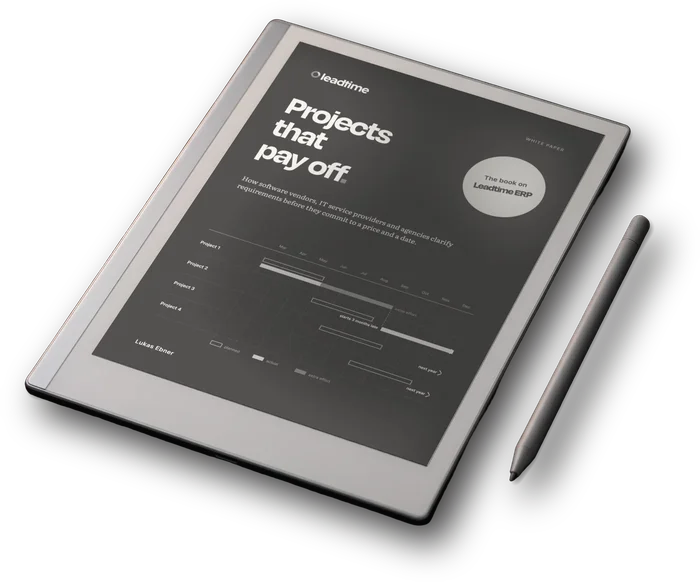
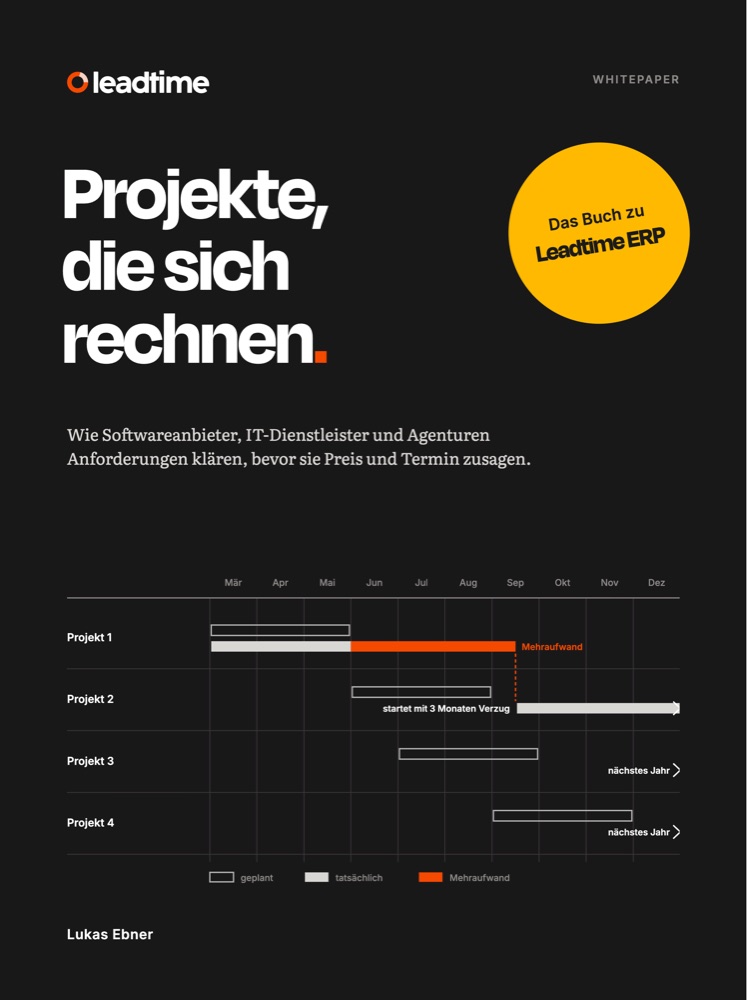
Projects that pay off.
The book shows how software vendors, IT service providers and agencies clarify requirements before they commit to a price and a date.
Get the book for free08
You set up Leadtime yourself, without a consultancy project.
A classic ERP project often starts with consultants, a migration project of its own and modules for warehouse and manufacturing you will never need. In the end the team works around the interface. Leadtime is an ERP for people who hate ERP.
You set it up in a chat with the Leadtime Agent. Employees, clients, contacts, projects and tasks come in by CSV import, and Leadtime maps the columns with AI. You connect other systems through agents, MCP, the API, n8n or Zapier, and your accounting stays where it is. Leadtime contains only what service firms earn their money with: selling, delivering, supporting and invoicing.

09
Your team keeps working where it likes to work best.
Your clients keep writing emails, and the emails become tickets. Your team works in the app, in Slack or through its own agent, some without ever logging in. Leadtime stays in the background and brings together what belongs together. That is why your team uses Leadtime instead of working around it.
5 instead of 20 minutesper person per week for catching up on timesheets. Together with emails that become tickets straight away, that is around 310 hours a year with 20 people.*Image: four entry points, namely email, the app, Slack and your own agent, lead into the same ticket. A figure with a coffee sits on the edge of the ticket card.

Photo: A managing director leans with folded arms against a brick pillar in a loft office and looks thoughtfully towards the window.
Managing director of a digital agency
“Do I really have to hire someone for every new job?”
The answer: reason 1010
Your EBIT rises, whether you bank the time or put it into new work.
The hours from reasons 1 to 9 are freed up. You can use them in two ways. This is the calculation for a web agency with 20 employees, using our calculator’s default values.*
Calculation: 3,260 hours are freed up a year. Option A, the same work with fewer staff: 3,260 hours divided by 1,600 hours per role times €75,000 full cost gives about €152,800 lower staff costs; minus €12,960 for Leadtime that leaves €139,840 more EBIT, plus 66 percent. Option B, more work with the same team: 3,260 hours times 60 percent billable times an hourly rate of €110 gives about €215,200 more revenue; minus €12,960 that leaves €202,240 more EBIT, plus 96 percent. The starting point is €2.1 million revenue and €211,200 EBIT a year.
Starting point: €2.1 million revenue and €211,200 EBIT a year, a 10% EBIT margin. The percentages refer to this EBIT.
Change team size, hourly rate and processes yourself in the calculator.
* Model calculation with our calculator, default values. The figures at each reason are individual items of this calculation, and “up to 10×” applies to routine work. Leadtime prices are a draft. Not a promise of results.
What managing directors ask
What managing directors ask us.
We already have five tools that work. Why switch?
The tools work, but each on its own. Leadtime replaces the ones for sales, projects, service, time and invoicing, and the handovers between them go away. Your accounting stays. The best way to show you is with one of your own jobs.
Can an agent just change things?
It may do what its role allows, and nothing more. You decide whether it works only on its own task or across the whole system. Every change carries its name, and if you deactivate it, it is locked out immediately.
Our tax adviser wants DATEV.
There is no DATEV export. Invoices go out as e-invoices, as PDFs with embedded data. Anything else you pass on via the API, Zapier or n8n.
Our clients write emails, not tickets.
And they can keep doing so. The email becomes a ticket, and your reply goes back from your own mailbox. Anyone who prefers can use the client portal.
You’re a young company. What if you’re gone one day?
We use Leadtime ourselves every day, with people and agents in the team. Through the public API and MCP access you can take your data out at any time. Our roadmap and changelog are public.
Will Leadtime bring us more work?
No, and we don’t promise that. Leadtime helps firms that have more work than they can cleanly deliver. Winning new clients is still up to you. Leadtime creates the capacity to deliver more work without having to hire for it.
Next step
Let us show you on one
of your jobs.
30 minutes, one real job from your day-to-day work. Not a sales pitch, but your own process in Leadtime.