Written by
Lukas
•
•
Agencies

It's Monday standup. The project lead asks: "Where does the Müller Packaging redesign stand?" Three people look at three different screens. One has a Trello board open. The designer is scrolling through Notion. The developer is staring at his personal Excel sheet. The answer comes in three versions – none of them match.
This isn't a one-off incident. 55% of knowledge workers report using multiple apps that do the same job, and 60% say tool overload actively hurts their collaboration (Cornell University / Qatalog, 2023). The average employee switches between applications over 1,100 times per day (Harvard Business Review, 2022).
The response in most agencies? Test another tool. Set up another board. Host another "this time we'll get it right" meeting. But the real problem runs deeper: picking the right tool isn't a design question. It's a structure question.
The Blank Canvas Trap
Modern tools like Trello, Notion, or ClickUp are essentially blank canvases. They come with possibilities, not answers. That's their strength – and their biggest risk.
Picture an empty office. No furniture, no signs, no meeting rhythm. Everyone finds their own space, organizes themselves, files documents wherever it seems to fit. After a few weeks: chaos. Not because people are incompetent – but because nobody defined the rules.
That's exactly what happens when agencies set up a new project board without first clarifying how work should actually flow. Without defined ownership, clear handoff points, and agreed-upon ground rules, every board becomes a digital junk drawer. Tasks pile up, priorities blur, deadlines slip. The tool is there – but nothing has changed.
Three Teams, Three Systems, Zero Visibility
A digital agency in Munich, around 35 people, specializes in e-commerce. In 2022, each team used Trello – but each team used it differently. One board ran "To Do / Doing / Done." The second had "Inbox / In Progress / Needs Feedback / Shipped." The third worked entirely with custom labels instead of columns.

Within a few months, nobody trusted the boards anymore. The actual work happened elsewhere: in DMs, in spontaneous calls, in Excel sheets that nobody but the creator understood. The tool was there. The shared language was missing.
The problem wasn't Trello. The problem was that nobody had defined what a ticket means, when ownership changes hands, or what "done" looks like. If you want to run a project cleanly, you have to answer these questions before any software enters the picture.
What Agencies Actually Need
The missing piece isn't a better tool. It's a shared operating system – the rulebook everyone actually agrees on before anybody opens a project board.
Three questions that most teams don't have consistent answers to: Who's responsible for the client briefing? Who decides when a concept is "final"? How does a signed proposal become a live project?
Until those questions are answered, the most flexible tool in the world won't help. In fact, flexibility makes it worse. Everyone builds their own workflow. Processes stay in people's heads instead of in the system. Handoffs happen by accident in Slack or in the hallway. What started as a board becomes a chaotic storage closet.
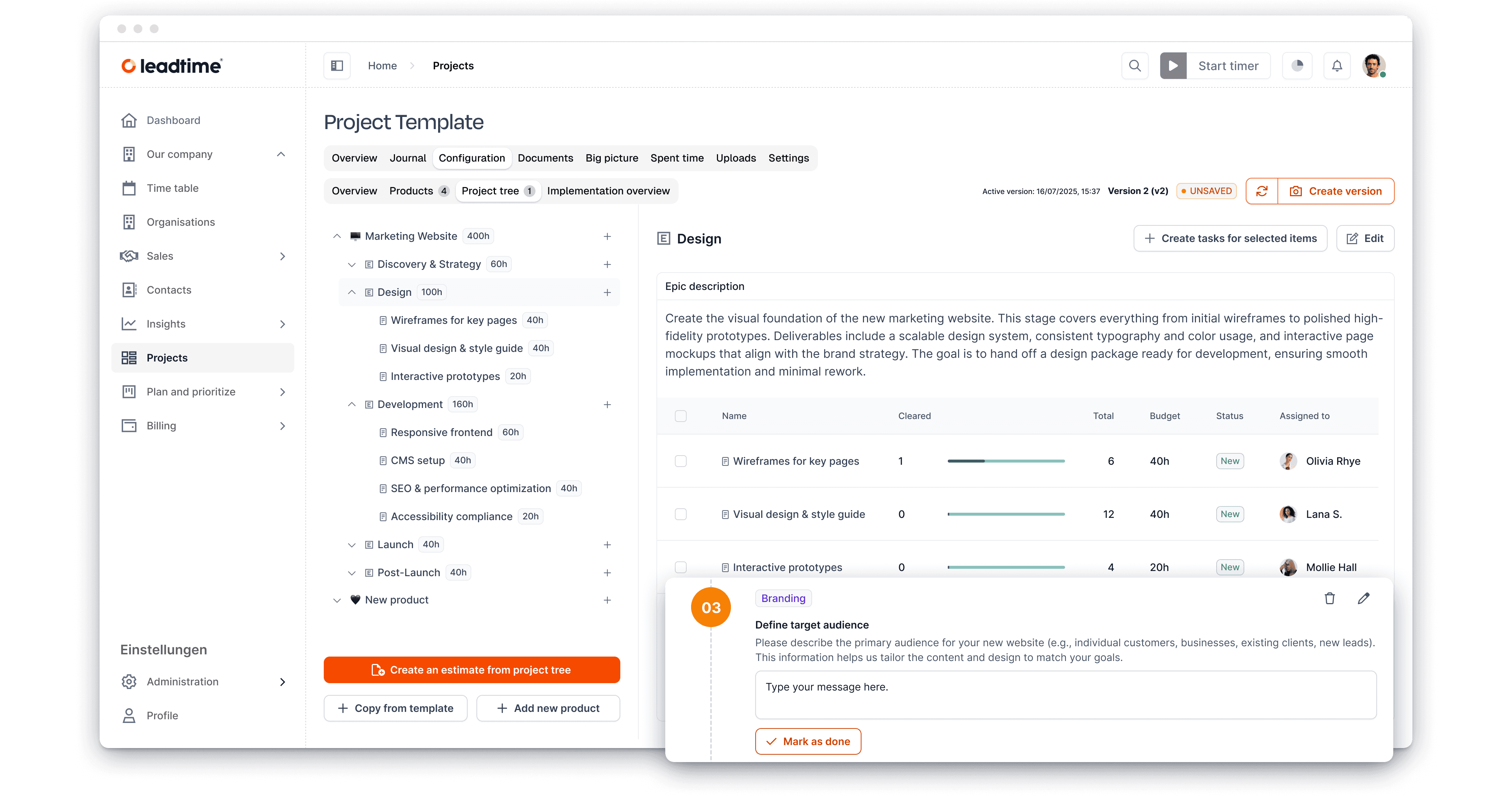
A mid-sized IT consulting firm in Hamburg made exactly this shift in 2023. 28 consultants, focused on enterprise digitalization, previously trapped in homegrown Excel chaos. But instead of just buying a new tool, they defined their processes first: every lead becomes a ticket in the sales project. Once an offer is accepted, a project automatically spins up with pre-configured work packages. Each work package has an owner, a reviewer, and clear acceptance criteria.
Only then did they choose the right tool. The results after six months: 40% fewer follow-up questions, 25% faster project closeouts. And for the first time, they could clearly see where time actually went.
Process Beats Feature List
If you start with "agency software comparison," you've already asked the wrong question. The right sequence is uncomfortable because it requires work before you even book a demo:
Clarify roles and responsibilities – who decides what? Define handoff points – how does work reliably move between people? Set standards – how do we ensure everyone works the same way? Only then: Which tool maps this best?
Once that structure is in place, tool selection becomes a question of fit, not salvation. And this is where tools that commit to a specific way of working differ from those that simply offer flexibility. Some tools – Basecamp was an early example – deliberately choose a particular workflow and force teams into structure. Others leave all doors open.
For agencies standardizing their processes for the first time, a clear framework is often more valuable than maximum configurability. Not because teams are incapable – but because structure shouldn't be the problem of the individual. It should be a decision made by the organization.
When Structure and Tool Grow Together
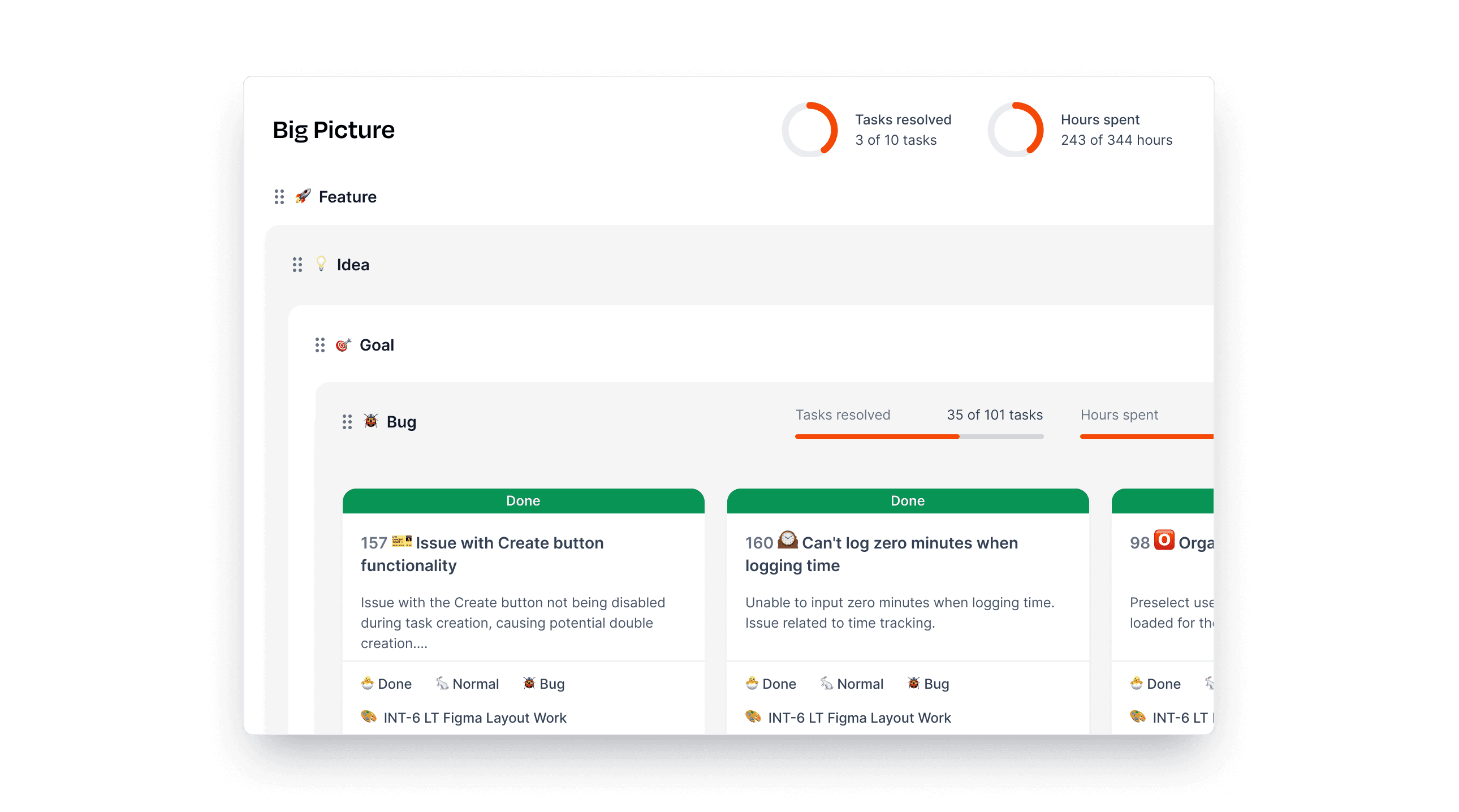
Leadtime was built with exactly this conviction: not as a blank canvas, but as a functioning operating system for agencies and IT service providers. With built-in process logic that maps the entire flow – lead, proposal, project, execution, billing – instead of just listing features.
Is that the right approach for every agency? Depends. If you already have structure that works and just need a tool to match it – excellent. But if you're noticing the problem runs deeper, if teams prioritize differently, handoffs vanish, and nobody actually knows where a project stands – then the question isn't "Which tool?" It's "What structure?"
The answer to that doesn't have to be Leadtime. But if you're building an agency that actually works – it has to be an answer that comes before the login. Not after.