deGet a demoTry for free
Shared Inbox vs. Ticketing System: Why the Switch Hurts — and Why It's Still Worth It

Legal & Notices

When You Don't Notice Your Business Is on Fire

Agency management software – from firefighting to scalable growth

Running an agency often means constantly juggling client work and new business at the same time. Projects need to be delivered while the pipeline has to stay full — usually without clear roles, processes, or reliable tools. Leadtime cuts through the chaos: a purpose-built platform that unifies your operations, speeds up workflows, and gives you room to breathe as a business owner.

Agency management software Leadtime – project overview for digital agencies

Run your agency like a system, not a scramble

Leadtime gives your agency an all-in-one, ready-to-use infrastructure that brings structure, scalability, and predictability to your business.

One continuous flow

Agency founders are constantly torn between selling and delivering. Leadtime brings order to your daily operations, keeps projects on track, and frees up time to focus on growth instead of firefighting. Structure replaces chaos, and scaling becomes possible.

Agency team collaborating – continuous workflow

Professional workflows out of the box

There's no shortage of agency tools – ticketing here, CRM there, invoicing somewhere else. But none of them cover the full workflow. Agencies end up running a patchwork of tools. Leadtime brings everything to one place: quotes, projects, resources, finances, and support – pre-configured and ready to go.

All-in-one agency software with time tracking and billing

From erratic project stress to recurring revenue

One-off projects create constant pressure and unpredictable revenue. Leadtime makes repeat business easy: create follow-up offers in minutes, structure add-ons, manage retainers, and automate billing—turning scattered jobs into a reliable revenue engine.

Effortless billing

Juggling spreadsheets and tools drains productivity. Leadtime automates time tracking, invoicing, and payments in one system—saving hours, preventing errors, and giving you complete control over your agency's financial backbone without extra admin work.

Team alignment – automated billing

Time Tracking

30%

more billable hours

Track time consistently with built-in enforcement — boosting billable hours and transparency.

Reusable Components

50%

faster project delivery

Deliver projects faster by reusing structured elements across workflows and teams.

Integrated Billing

80%

quicker invoicing

Automate invoicing from quote to cash in one place — faster, accurate, and hassle-free.

Analytics & Capacity

40%

better utilization

Get full visibility with real-time dashboards to plan resources and increase utilization.

Consultation – measurable agency results

The agency software you've always been looking for

Team collaboration – integrated time tracking with Leadtime

Time Tracking Your Team Actually Uses

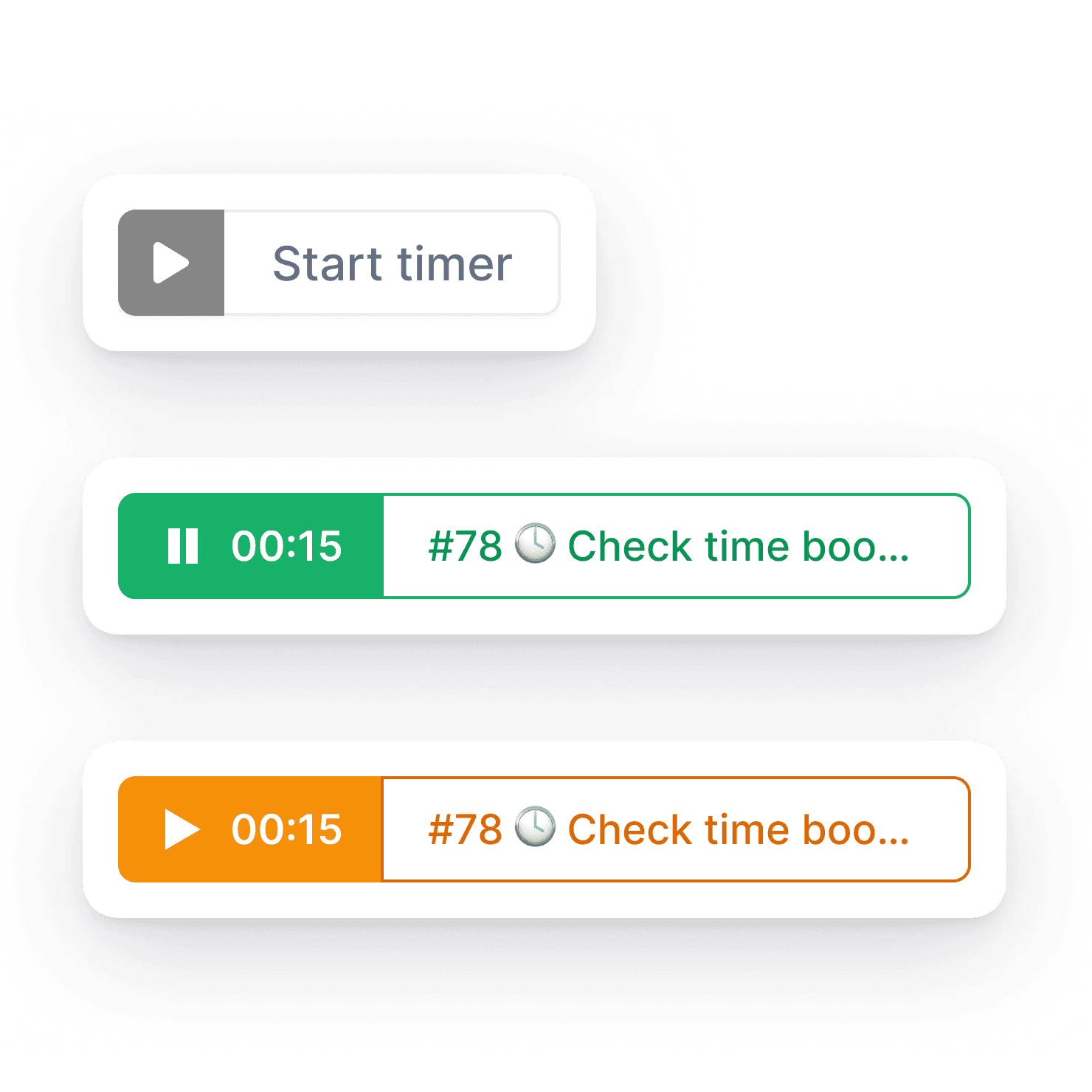
Forget separate time tracking tools nobody opens. Integrate time capture directly where work happens – in the ticket. Your designer clicks Play in the header, works on the layout, clicks Stop. Done. No app switching, no interrupted thought processes, no reconstructing from calendars afterward.

Enable parallel trackers for agency reality: Your developer works on Feature X, client calls, second tracker starts for the phone call, then seamlessly back to Feature X. Every activity automatically lands on the right project and client – without manual assignment.

Use gentle reminders instead of annoying control: If no tracker runs after 5 minutes, a subtle notification appears. Not as surveillance, but as service – so no hours go missing at month-end that nobody can assign anymore.

Create acceptance through simplicity. Time tracking doesn't fail because of technology, but because of friction in the workflow.

Time tracking for your team

Leadtime timer interface for intuitive time tracking

Plan Your Team – Without Spreadsheet Chaos

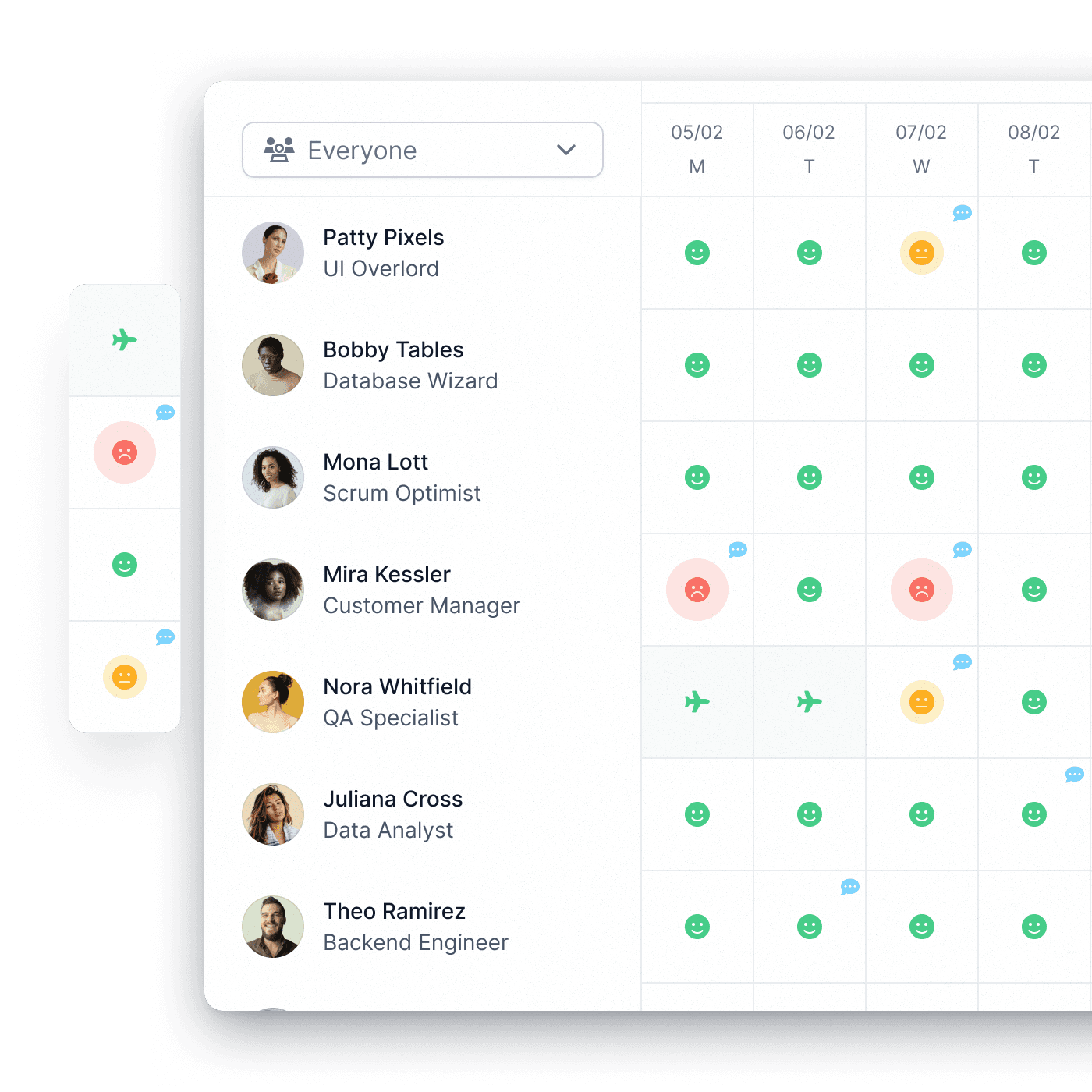
Forget Excel lists for vacation and separate tools for sick leave. Bring all team capacities together in the central team calendar: Who's working today? Who's on vacation? Who called in sick? What's the current team coverage?

Enable self-service for your creative team: Submit vacation requests directly from the profile, upload sick leave certificates, view your own overtime. Managers approve with one click and immediately see the impact on team coverage – no more endless email chains.

Automate overtime accounts: Every minute tracked above contractual hours flows into the overtime account, can be converted to vacation days or paid out. Carry over unused vacation days automatically to the next year or handle special cases with flexible vacation adjustments.

Create transparency instead of micromanagement. Your team plans independently, you keep the overview.

Manage your team
Leadtime capacity planning with team weekly overview

Intuitive task planning that leaves nothing behind

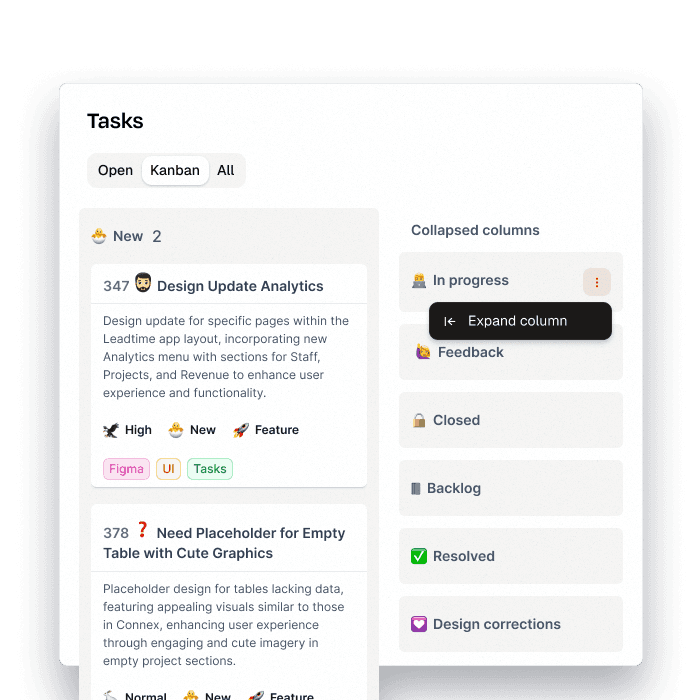
End morning "what should I work on next?" questions. The planning chain brings structure to multi-client chaos: In Big Picture you prioritize per client—drag feature requests, bug fixes, and design tasks into the right order via drag & drop. Your client sees their priorities transparently.

In Pools you decide across projects: Which client gets your designer capacity this week? In Pipeline you distribute concretely: 8 hours UX design for Client A, 4 hours bugfixes for Client B—in 15-minute slots, per week, visually.

Activate the week—and every designer finds their prioritized tasks automatically in the Stack. No more guessing. Only focused work. Turn "all clients are urgent" into predictable throughput times.

Intuiitive capacity planning
Leadtime Kanban board for agency task planning

Integrations

Connect Leadtime to your tools, workflows, and AI systems—no matter how simple or advanced your setup is.

Zapier

No-code automation

Zapier

Connect Leadtime to thousands of tools with no code.

API

Developer API

API

Create custom integrations and internal tools on top of Leadtime.

n8n

Low-code automation

n8n

Build advanced workflows with full control over logic and execution.

MCP

AI-native integration

MCP

Connect AI assistants to live Leadtime workspace data.

FAQ

Got questions? We’ve got answers.

Agencies juggle multiple clients, fluctuating workloads, and constant context-switching. Leadtime brings everything into one system: client tickets, time tracking, capacity planning, invoicing, and team coordination. The Pools system lets account managers prioritize across all their clients in one view. The Pipeline shows exactly how much capacity each team member has with 15-minute precision. Every logged hour automatically lands on the right client and ticket for transparent billing. You stop losing revenue to unbilled hours, prevent team burnout from overcommitment, and identify unprofitable clients before they drain resources.

The four-stage planning chain scales with client count: Big Picture for individual client priorities, Pools for cross-client overview, Pipelines for weekly team capacity allocation, and Stacks for individual work lists. Each account manager sees their 5-10 clients in one Pool dashboard. Team leads can set strategic priorities across all clients. The Workload Insights automatically flag which projects have tickets piling up. Organization-specific helpdesk settings route each client's support emails to their dedicated project. This structure prevents chaos as you scale – whether you manage 10 clients or 100.

Yes, through public/internal separation. Clients create tickets through their portal, track progress in real-time, and see public comments and status updates. Your internal technical discussions, time entries, and team coordination stay completely hidden. When you move a ticket to "Feedback," the client sees it automatically without you sending an email. Express quotes generated from tickets give clients instant pricing. This transparency reduces "where's my project?" calls by 80% while protecting your internal workflows and preventing clients from seeing your actual costs or internal debates.

Sales Insights forecast future revenue based on subscriptions, average support income, and planned projects. Employee Insights show which team members spend 60% on billable work vs. 30% on admin overhead. Goal Insights track whether your team hits their billable hour targets (6 hours for developers, 4 for PMs). When you see revenue flatlining while hours worked increase, you know you have a profitability problem. The data tells you whether to raise rates, fire unprofitable clients, hire more juniors, or reduce non-billable activities. You stop guessing and start managing by numbers.

Those are task managers. Leadtime is a complete service delivery system built specifically for billable work. Time tracking isn't bolted on – it's integrated into every ticket. You don't just manage tasks, you track exactly what they cost and what you can bill. Invoicing flows directly from completed work with automatic invoice drafts. The planning chain (Pools → Pipeline → Stacks) is designed for client work prioritization, not generic project management. And insights show profitability per client, billable hour achievement, and revenue forecasts – metrics that matter when you sell time. You're not adapting a generic tool; you're using one built for how agencies actually work.