deGet a demoTry for free
Shared Inbox vs. Ticketing System: Why the Switch Hurts — and Why It's Still Worth It

Legal & Notices

When You Don't Notice Your Business Is on Fire

Scale onboarding and support for your SaaS – from day one

The client signed – now implementation begins. But let's be honest: That deadline you just committed to? It's probably not realistic. Again. Onboarding is make-or-break. This is where your SaaS either proves itself – or falls short. A rocky start erodes trust before customers ever experience what your product can do. With Leadtime, you deliver structured, professional onboarding that works from day one.

Software for SaaS companies – onboarding and support dashboard

Turn professional implementations into your trademark

First impressions matter – especially when you want small pilot projects to grow into enterprise accounts. Leadtime helps your team create structured, transparent, and inspiring onboarding experiences that lay the foundation for long-term customer success and expansion.

Deliver complex projects faster

Complex customer requirements slowing you down? They don't have to. Leadtime gives you structure for the tough cases – reusable components for custom projects, clear processes instead of improvisation, and still the flexibility for special requests. Your team stays in control, customers get results on time. Turn complexity into a competitive advantage instead of a bottleneck.

Build customer relationships that last

Sloppy onboarding damages customer relationships before they even begin. That's revenue slipping through your fingers. Professional implementation keeps customers engaged, drives retention, and ensures your acquisition costs actually pay off.

Customer success manager – centralized SaaS support

From cost center to profit driver

Most companies don't know what their onboarding really costs. Not really. Sure, the direct hours get tracked. But all the hidden time drains? The spontaneous support calls, the endless Slack threads, the unplanned meetings, the rework? That all flies under the radar. Leadtime makes these hidden costs visible and puts you back in control. You see which projects are profitable and where you're burning money.

Remote project work – making hidden costs visible

The first deal is just the beginning

A great start opens doors. When onboarding works, customers trust you with more – more users, more departments, more budget. A messy start closes those doors forever. Your Customer Success team needs the right foundation to turn pilot projects into enterprise deals. With Leadtime, you don't just deliver successful onboarding – you systematically build trust.

Business professional during coffee break – successful project kickoff

Requirements Capture

75%

faster requirements

Capture requirements directly in the system — no copy-paste, no tool switching. Make your work structured and reusable.

Create Proposals

80%

faster quotations

Create proposals in minutes with reusable blocks from project and product libraries — consistent and ready to send.

Collaboration

50%

fewer delays

Keep clients engaged and informed about roadblocks, task status, and project updates — before issues turn into problems.

Project Scope

90%

less scope disputes

With clean, detailed specifications, you’ll never argue about scope again. Everyone sees exactly what was agreed.

Business meeting situation

Everything Your SaaS Team needs in one Platform.

professional female near a windowTeam meeting for resource planning

Centralize Your Entire Technical Support

Bring all support requests from emails, phone calls, and customer portals into one place. Leadtime automatically converts every request into a structured ticket with complete history, direct time tracking, and clear accountability.

Give your customers real transparency: Let them create tickets themselves, track progress in real-time, and receive automatic updates – without constantly calling you. Cleanly separate internal discussions from public customer communication.

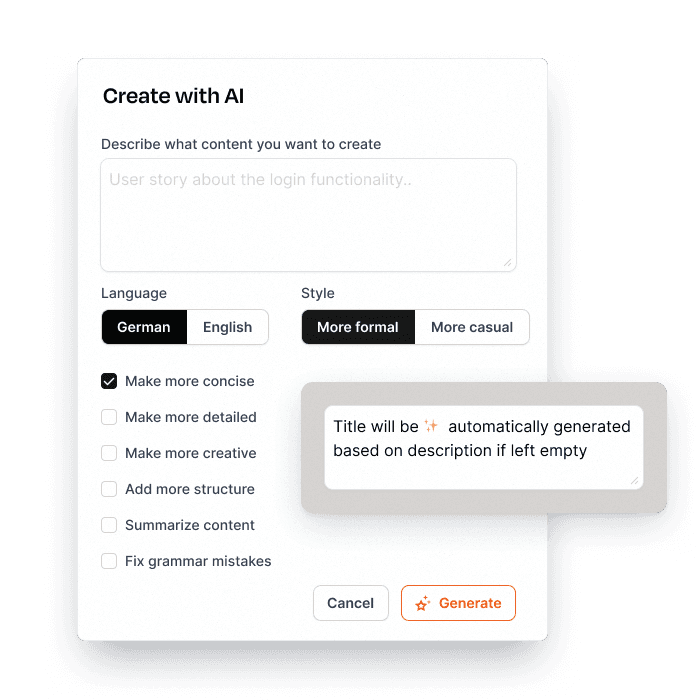
Use the AI assistant to formulate clear responses in seconds. Control priorities through Pipeline and Stacks – so every team member immediately knows which ticket is next.

Create measurable response times, eliminate missed requests, and free your team from email chaos. Run support that scales – not one that collapses under growth.

B2B helpdesk & ticketing

Leadtime AI assistant for automated ticket creation

Developer Time: Fully Utilized. Not Wasted.

Distribute tasks to your developers using the Pipeline—in 15-minute slots, per week, per person. See instantly: Who has capacity? Where's the overload risk? Plan realistically instead of optimistically.

Activate the week—and every developer finds their prioritized tasks automatically in the Stack, their personalized Kanban board. No more follow-up questions. No uncertainty. Just focused execution in the right order.

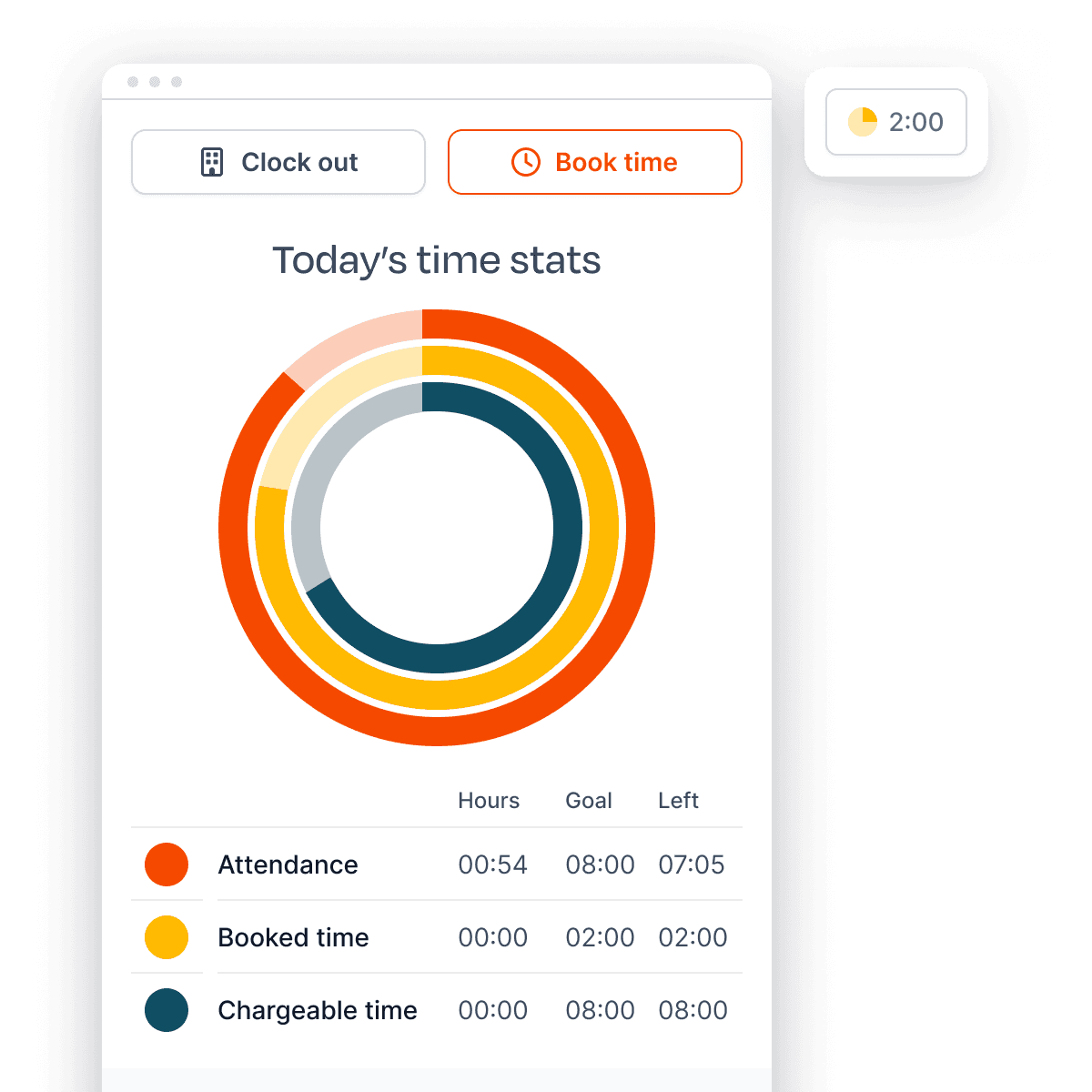
Compare plan versus reality in real-time: What was planned? What was actually tracked? Learn from every week and continuously improve your estimates. Turn chaotic resource juggling into precise capacity planning—and lost hours into measurable productivity.

Time tracking for your team
MRR analytics and recurring revenue tracking in Leadtime

Onboarding in Days. Not Weeks.

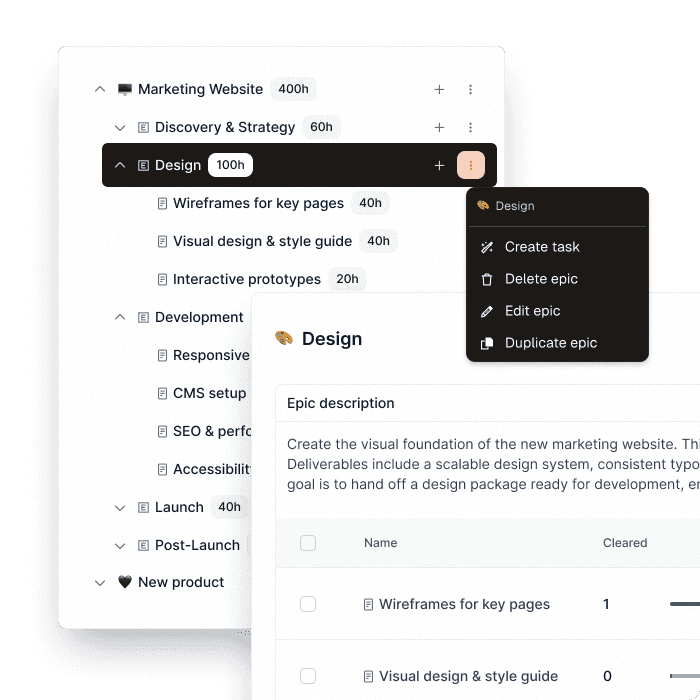
Standardize your onboarding projects with reusable project components. Break every setup into proven building blocks—from technical implementation to training and final acceptance. Eliminate chaos and ad-hoc planning.

Launch new customers in days instead of weeks: Use battle-tested templates, customize them per project, and start execution immediately. Your customers see results faster, you reduce effort and error rates.

Document quality through structured acceptance tests. Don't release anything before all checkpoints pass successfully. Turn lengthy onboardings into precise, predictable processes—and frustrated new customers into enthusiastic power users.

Try for free
Leadtime requirements capture for structured specifications

Integrations

Connect Leadtime to your tools, workflows, and AI systems—no matter how simple or advanced your setup is.

Zapier

No-code automation

Zapier

Connect Leadtime to thousands of tools with no code.

API

Developer API

API

Create custom integrations and internal tools on top of Leadtime.

n8n

Low-code automation

n8n

Build advanced workflows with full control over logic and execution.

MCP

AI-native integration

MCP

Connect AI assistants to live Leadtime workspace data.

FAQ

Got questions? We’ve got answers.

Because Leadtime solves exactly the problems IT service providers, agencies, and SaaS companies face in multi-project environments. Technical service providers juggle multiple client projects simultaneously, handle complex onboarding processes, and struggle with specialist bottlenecks. Leadtime was built specifically for this: The planning chain (Big Picture → Pools → Pipeline → Stacks) enables realistic capacity planning across all projects. Project components standardize recurring setups and reduce time-to-value by up to 80%. The integrated billing system automatically invoices tickets, projects, retainers, and products—no manual rework. Especially relevant for SaaS companies: Structured onboarding projects with acceptance tests ensure predictable quality. Support runs through the integrated helpdesk system with email integration. And all data—from sales pipeline to resource planning to profitability—is transparently available in real-time. One tool instead of ten different silos.

Because tool chaos makes you slower, creates errors, and makes realistic planning impossible. When planning runs in Asana, time tracking in Toggl, finances in Excel, and communication in Slack, gaps emerge: Information gets lost, needs double maintenance, is never current. To realistically plan a project, you'd need requirements + employee availability + workload from other projects—but exactly this data sits in different tools. Result: Flying blind instead of making informed decisions. With Leadtime you have a single source of truth: When a task is planned in the pipeline, the developer sees it automatically in the stack. When they track time, it flows directly into billing. When a project completes, the invoice generates in seconds. No copy-paste, no media breaks, no manual updates. You save up to 5 hours of coordination effort per week per project—and your data is always consistent and current.

Yes, Leadtime provides a comprehensive REST API for integrations. You'll find the complete API documentation at https://leadtime.de/app/api/public/docs. The API allows programmatic access to most Leadtime entities—projects, tasks, time bookings, organizations, invoices, and more. This enables you to build custom integrations with your existing tools. Common use cases: Sync customer data from your CRM, automate project creation from form submissions, push time tracking from external tools, or pull financial data into your accounting system. The API uses standard REST principles with JSON payloads and supports authentication via personal access tokens. You can also use webhooks to get real-time notifications about events in Leadtime—like when a task changes status or a new invoice is created. This way, Leadtime becomes the central hub of your service delivery workflow while still playing nicely with your existing tool landscape. No vendor lock-in, full flexibility.

Yes, Leadtime has a fully integrated helpdesk system with email integration and AI support. The helpdesk system automatically converts incoming emails into support tickets—including subject, sender, and content. You connect your support email address (e.g., support@your-company.com), and Leadtime regularly fetches new messages. Each message becomes a task with predefined defaults: project, status, assignee, priority, tags. Your team replies directly in the ticket thread—responses automatically go out as emails. You can even set up organization-specific helpdesk rules: Customer A gets their own email address, project, and assignee. Automatic confirmation emails are possible. And thanks to the AI text assistant, frequent inquiries get handled faster. The big advantage: Support isn't isolated but part of the overall system. Time bookings on support tickets flow into billing, workload is visible in the pipeline, and support performance gets evaluated in insights. One system for projects AND support.

Project setup in minutes instead of days—teams typically see productivity gains within the first week. Leadtime is designed for rapid onboarding: Day 1: Import your team, connect your email accounts, set up basic workspace settings. Day 2-3: Create your first project components as templates for recurring project types (onboarding, website setup, feature implementation). Use conditions and questions to make them flexible. Day 4-5: Start weekly pipeline planning with your team—distribute tasks across developers with 15-minute precision, activate the week, and watch tasks flow into individual stacks automatically. Most teams report measurable improvements within 7-10 days: Project setup becomes 80% faster with templates. Coordination overhead drops by up to 5 hours per project per week. Quote creation shrinks from hours to minutes. Developer productivity increases because they no longer need to ask "what should I work on next?" The platform grows with you: Start with core features (projects, tasks, time tracking), then gradually add planning tools, billing automation, and insights dashboards. No big-bang migration required—Leadtime adapts to your pace.