



deGet a demoTry for free
Shared Inbox vs. Ticketing System: Why the Switch Hurts — and Why It's Still Worth It

Legal & Notices

When You Don't Notice Your Business Is on Fire

Project management for agencies – with templates and automation

Reusable components and smart automation so every project starts half done.

Race track paintingLeadtime project versioning

Plan Once, Execute Again and Again

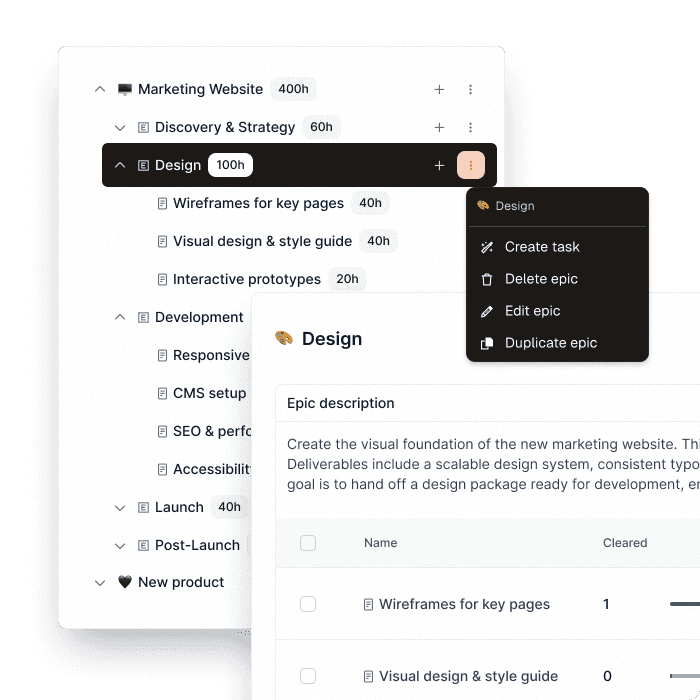
Stop reinventing the wheel with each new project. Create complete plans, tasks, and documents in one click using tailored templates. Over time, refine your structure and turn every project into a repeatable success.

Use tree structures, epics, and work packages to build clear, scalable plans. Everything is logically connected, making even complex projects transparent and easy to manage from day one.

Leverage past insights to evolve templates and optimize planning. Each new project becomes smoother, faster, and more reliable than the last.

Try for free
Project components

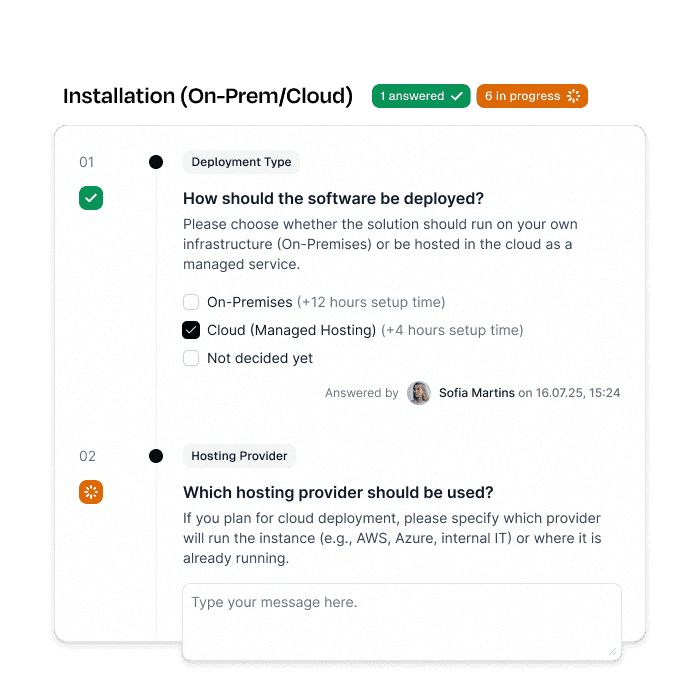
Capture Requirements the Smart Way

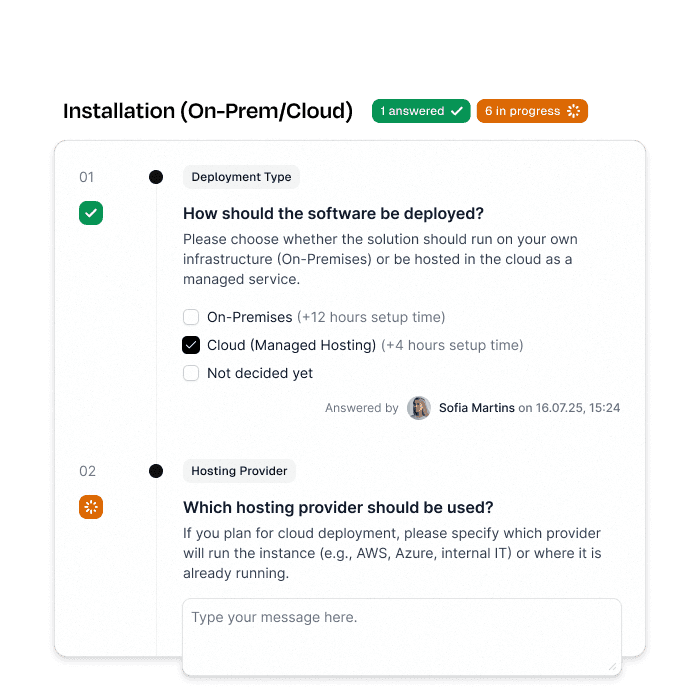
Stop chasing details through endless emails and scattered notes. Collect requirements directly in the system using dynamic questionnaires that keep everything structured, traceable, and ready for execution.

Define standardized question sets for different project types and tailor them on the fly for unique cases. This ensures complete, consistent, and client-approved specifications from day one.

With clear requirements in place, you avoid costly misunderstandings, accelerate planning, and give every project a solid foundation to build on.

Try for free
Dynamic forms in leadtime

Keep Every Project on Track

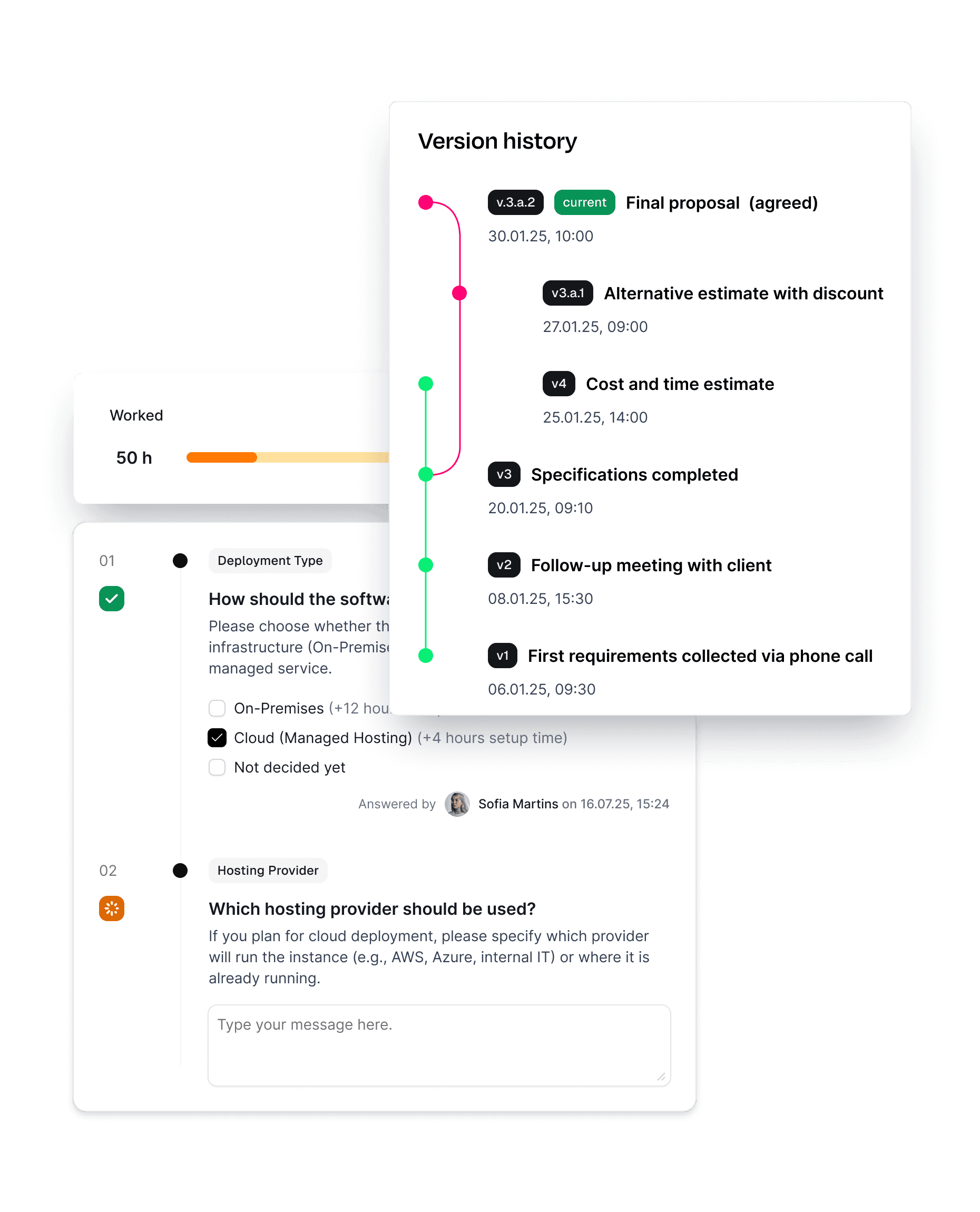
Stop scrambling to remember which scope was actually agreed upon. Create bulletproof versions that freeze your project's exact state at every critical milestone – from first quote to final contract.

Automatically capture all configuration changes, pricing adjustments, and client decisions in timestamped snapshots. Switch between versions to compare alternatives, negotiate variants, or prove exactly what was promised.

With clear version history, you avoid costly scope creep, settle disputes instantly, and turn every saved state into reliable quotes and specifications. No confusion, no gaps – just transparent documentation that protects both sides.

Try for free
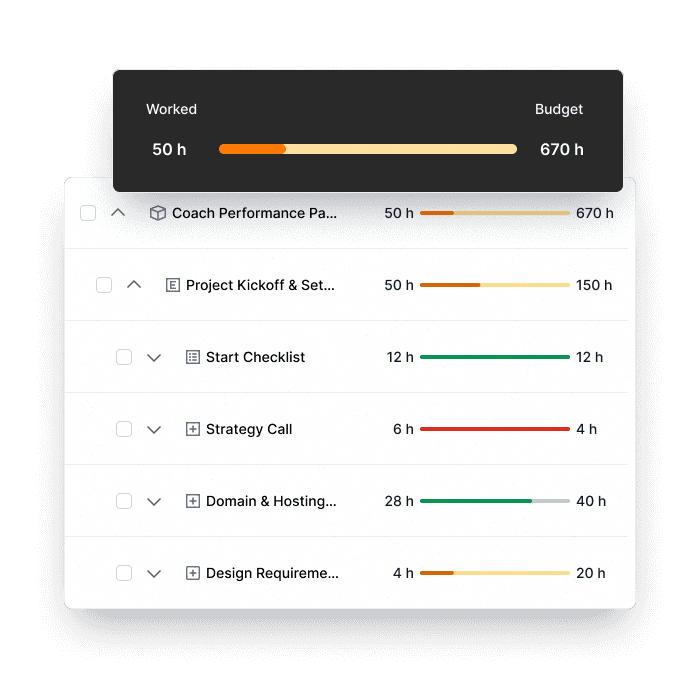
Project progress

Your Project’s Memory Bank

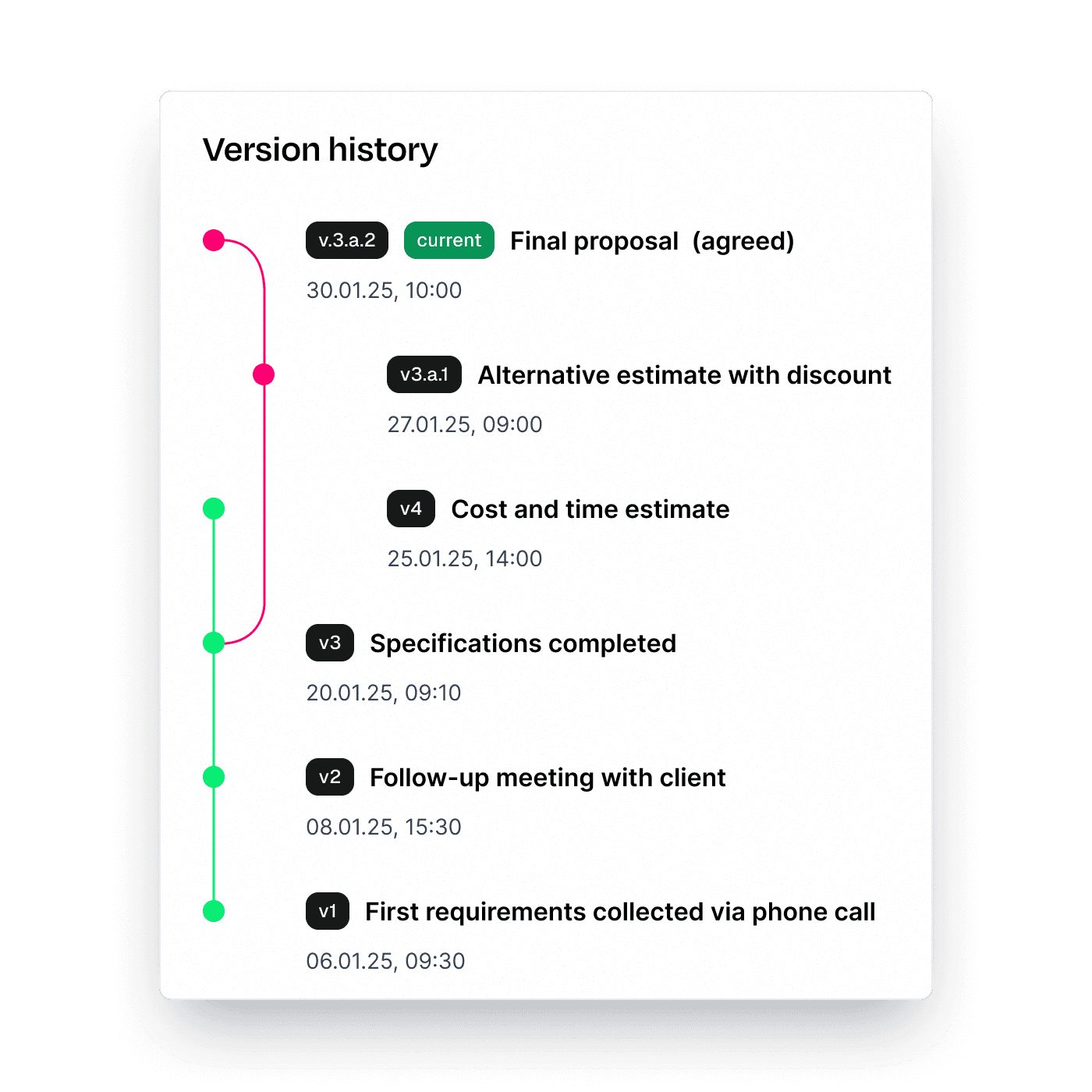
Keep a crystal-clear overview of every incremental change in your project plans. With intelligent version management, you can easily compare and restore previous states, ensuring nothing gets lost along the way.

Present multiple offer variants to your clients without messy spreadsheets or endless email threads. Every version is neatly documented, so you can trace what changed, when, and why—eliminating misunderstandings and scope disputes for good.

From initial draft to final agreement, version history keeps your team and clients fully aligned, making negotiations smoother and decisions faster.

Try for free
Versioning system in leadtime

Capture Requirements the Smart Way

Stop chasing details through endless emails and scattered notes. Collect requirements directly in the system using dynamic questionnaires that keep everything structured, traceable, and ready for execution.

Define standardized question sets for different project types and tailor them on the fly for unique cases. This ensures complete, consistent, and client-approved specifications from day one.

With clear requirements in place, you avoid costly misunderstandings, accelerate planning, and give every project a solid foundation to build on.

Try for free
Document templates

Smooth Handoffs with Built-In Testing

Rushing into go-live without structured testing is a recipe for expensive mistakes. Leadtime gives you built-in test case catalogs that make project acceptance transparent, systematic, and reliable — for both your team and your clients.

Attach predefined acceptance tests directly to your project templates to ensure every critical feature is verified before launch.

The result: smooth handovers, fewer bugs in production, and happy clients who trust your process.

Try for free
Components in leadtime

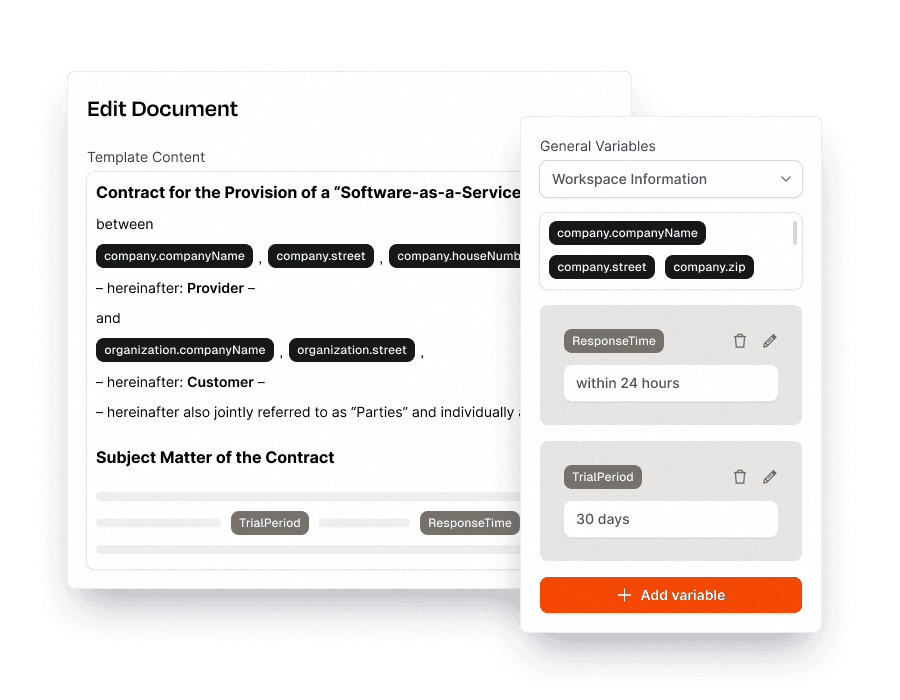
Say Goodbye to Manual Spec Writing

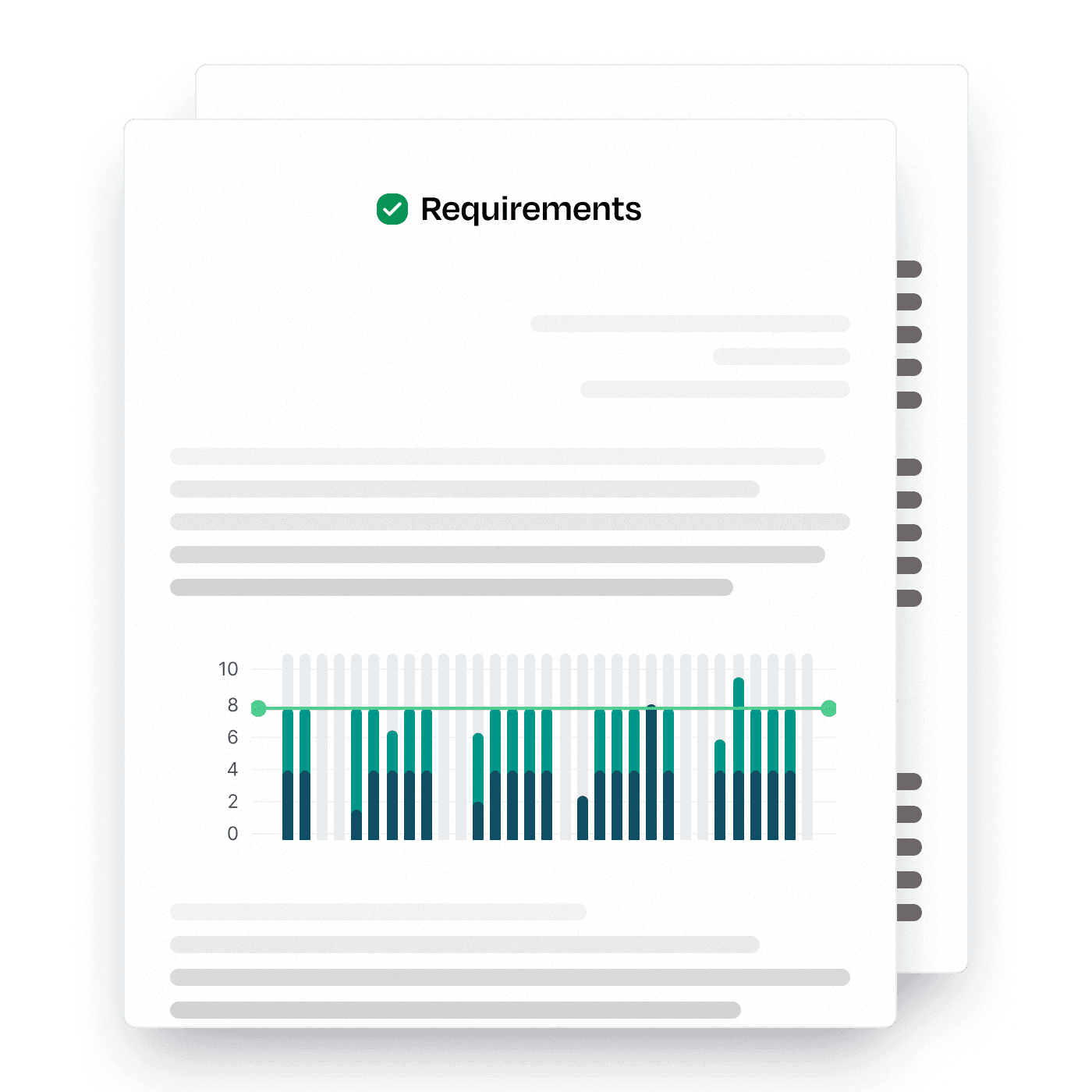
Writing detailed specifications is often time-consuming, expensive, and happens long before a deal is even signed. Leadtime changes that. With a single click, it transforms project structures and client inputs into precise, professional specification documents — saving you hours of manual work.

All requirements are clearly documented in a structured, transparent format, giving both sides confidence from the very start. Faster preparation, fewer misunderstandings, and a rock-solid foundation for every project.

Try for free
Automatic requirement documents
Race track

Run twice the projects in half the time

Ready, set, go: your workspace live in minutes, free for 1 month.

Try for free now!

FAQ

Got questions? We’ve got answers.

Because you don't need to reinvent the wheel with every project. With reusable components, you start every new project half-finished – proven structures, calculated efforts, documented processes are already there. Your project planning shrinks from days to minutes, calculations become more precise with each project, and your team immediately knows what to do. Each completed project makes you faster and more profitable for the next one.

Predictability and scalability. When every website project or CRM implementation is structured similarly, you can reliably calculate costs, predict resources, and guarantee quality. New team members are productive in days instead of weeks. Clients get consistent results. And most importantly: you can handle more projects simultaneously without your head exploding or quality suffering.

You finally know what your projects actually cost. Instead of guessing or relying on gut feeling, you see the real effort based on actual data from past projects. You create quotes in minutes instead of hours. Post-project reviews show you where you're losing money – and you adjust your templates accordingly. After a few projects, your estimates hit so accurately that projects finally stay profitable.

Because "he said, she said" costs money and destroys relationships. Versioning gives you bulletproof documentation: What was agreed when? What changes came later? When the client claims feature X was in scope, you show them version 2.1 from March 15th. When you need to justify a change request, you have the facts in black and white. No more discussions, no more unpaid extras, no more scope creep.

You see problems before they escalate. When the backend team falls behind, you immediately know that frontend and testing will also shift – and you can react before the client calls. You can make realistic commitments instead of optimistic promises. And most importantly: you don't lose time waiting unnecessarily because teams are waiting for each other without knowing it.

Because you finally keep the overview. Instead of searching through emails, notes, and meetings for the current status, you see everything in one structure. What's done? What's blocked? Where's the fire? This transparency takes the pressure off and gives you back that feeling of control. Your team works more focused because everyone knows what's next. And you sleep better at night.

Because this investment pays back multiple times after 3-5 projects. Every template you build well once saves you hours of planning, calculation, and communication on every new project. After a year, you have a library of templates that encode all your experience – and you can handle twice as many projects in the same time. That's the difference between a solo fighter and a scalable business.

You eliminate the two biggest profit killers: invisible extra work and poor calculation. When you know exactly what a project costs, and every deviation is documented, you stop selling work below value. Change requests get properly billed. Scope creep disappears. Teams don't waste time on unclear requirements. The result: projects stay on budget, margins rise, and you finally earn what your work is worth.