
Written by
Lukas
•
•
Agencies

Monday, 9:47 a.m. The product manager hasn't joined the daily standup. His Slack message says: "Everyone disagreed on Friday." The support ticket blocking three developers? Nobody scheduled it. The new integration feature should go live "sooner rather than later" – but when, exactly?
This isn't a priority problem. It's a prioritization system problem.
Everyone knows the methods. Eisenhower Matrix, MoSCoW, RICE, WSJF. You'll find them everywhere: in industry journals, on LinkedIn, in the third round of a services pitch. The methods aren't wrong. They're just not enough. What teams at agencies, IT service providers, and SaaS companies really need isn't another prioritization method – it's one continuous system that creates priorities, makes them visible, and adjusts them in real time.
Why "better structure" doesn't mean picking a method
Here's the odd paradox: companies that know and even apply MoSCoW or Eisenhower still end up with unclear priorities. Why? Because the method only structures strategic thinking. It doesn't structure the workflow.
The Standish Group documented it: only 31% of IT projects succeed. 50% run into trouble, 19% fail outright (Standish Group, CHAOS Report). The reason isn't the method. It's broken continuity: priorities get set in the executive meeting. They disappear into tickets. They never surface again until someone asks, "Wasn't that supposed to be urgent?"
The PMI Pulse of the Profession 2025 report makes it clearer: 37% of executives say "lack of clear goals" is the top reason for IT project failure. That's not a methods question. It's a system question: how do goals become concrete, sorted work? Who does the translation? And who makes sure reality actually follows the plan?
What happens when nobody really prioritizes
Let me get concrete. In a service company with 40 employees, two products, and 60 active client projects – the kind of shop that needs to get organized – you'll see this pattern:
Monday, 10 a.m. – leadership and product management decide Feature X is the top item. The ticket gets created Tuesday with an "Important" label. By Wednesday a developer sees it, but she's knee-deep in a customer demo bug fix. Then two more bugs land. Are those top items too? Nobody built a system for that. Friday rolls around: Feature X hasn't started. Customer Success is asking about unanswered support tickets.
This isn't chaos because of bad people. It's chaos because of missing transparency. Three levels – business goal, ticket level, team reality – aren't talking to each other.
It costs real money. According to PMI, 12% of all resources get wasted through ineffective project management. In a team of eight developers, that's one full person working in confusion every single day.
How to prioritize tasks on four levels
The system that works runs on four zoom levels – from strategic overview to daily work. Each level has its job. Each feeds priorities to the next.
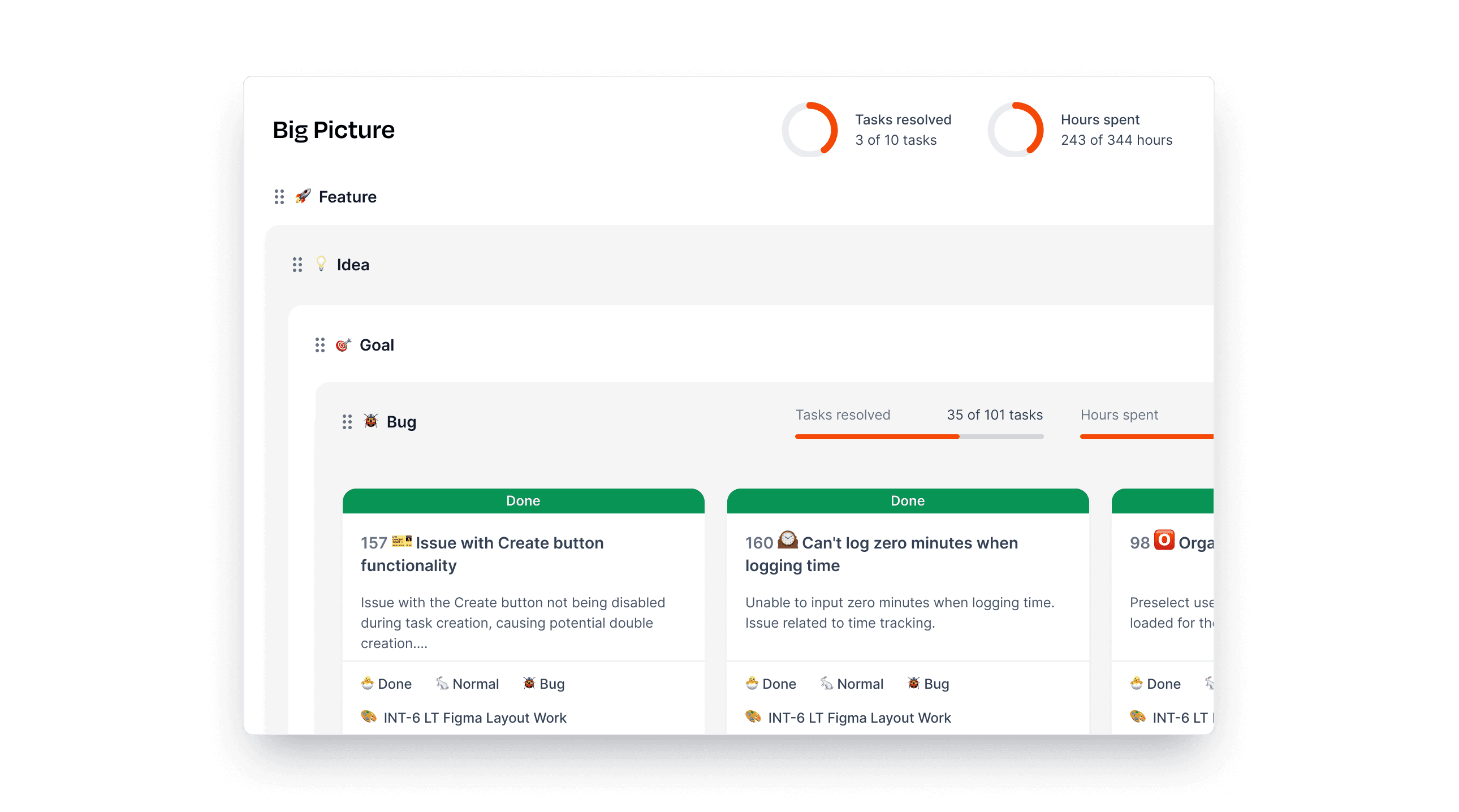
Level 1: Project-Level – the Big Picture. This is where you decide: which features get solved in what order? It's a visual prioritization board at project level. When a feature depends on three others, "let's do these three first" isn't confusion – it's an explicit plan.
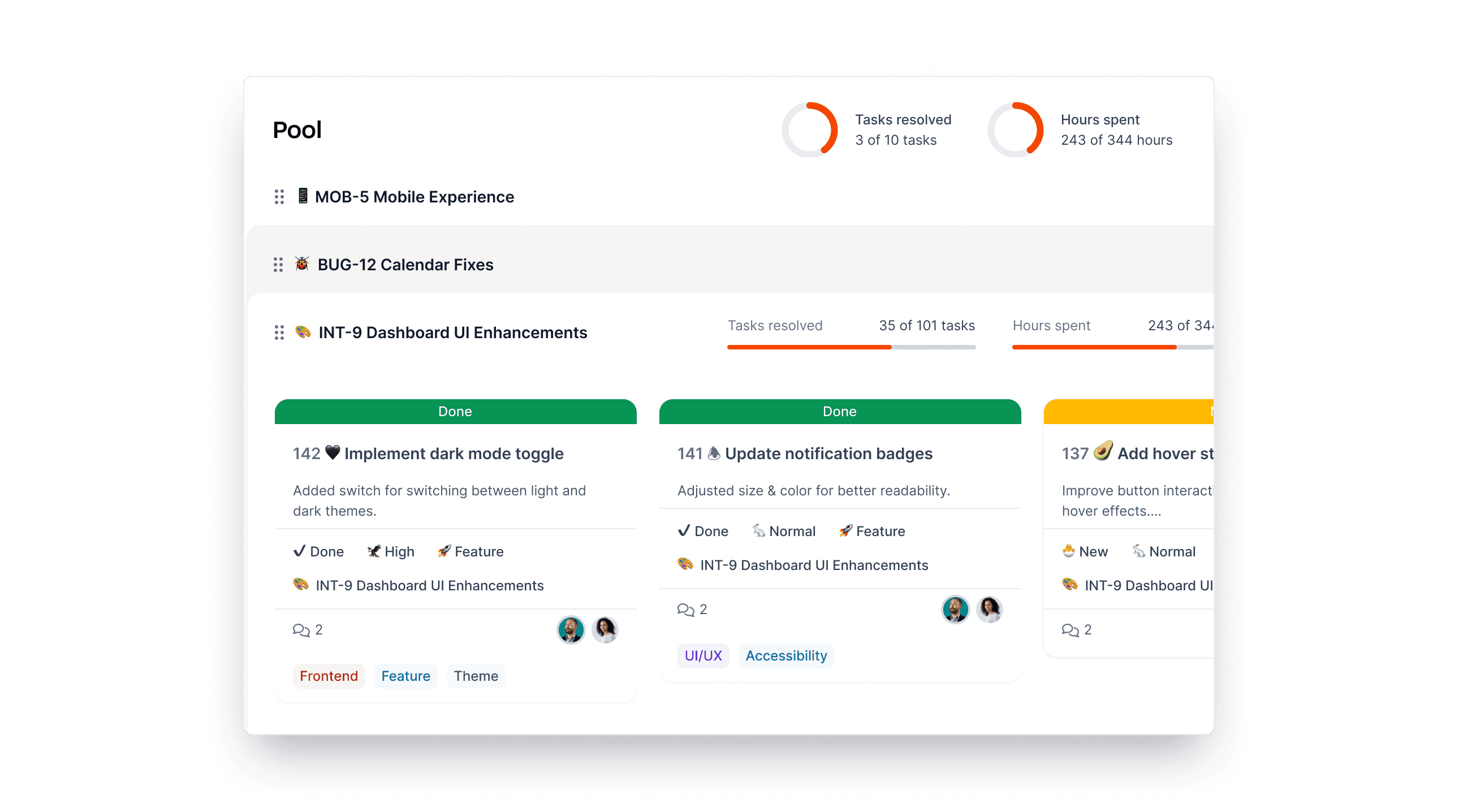
Level 2: Cross-Project – the ticket backlog. What about five projects at once? Ten customers each needing something live "tomorrow"? This is where you sort all tickets across every project. Only room for first place, second place, third place. When a new request comes in, something else moves down. It forces honesty.
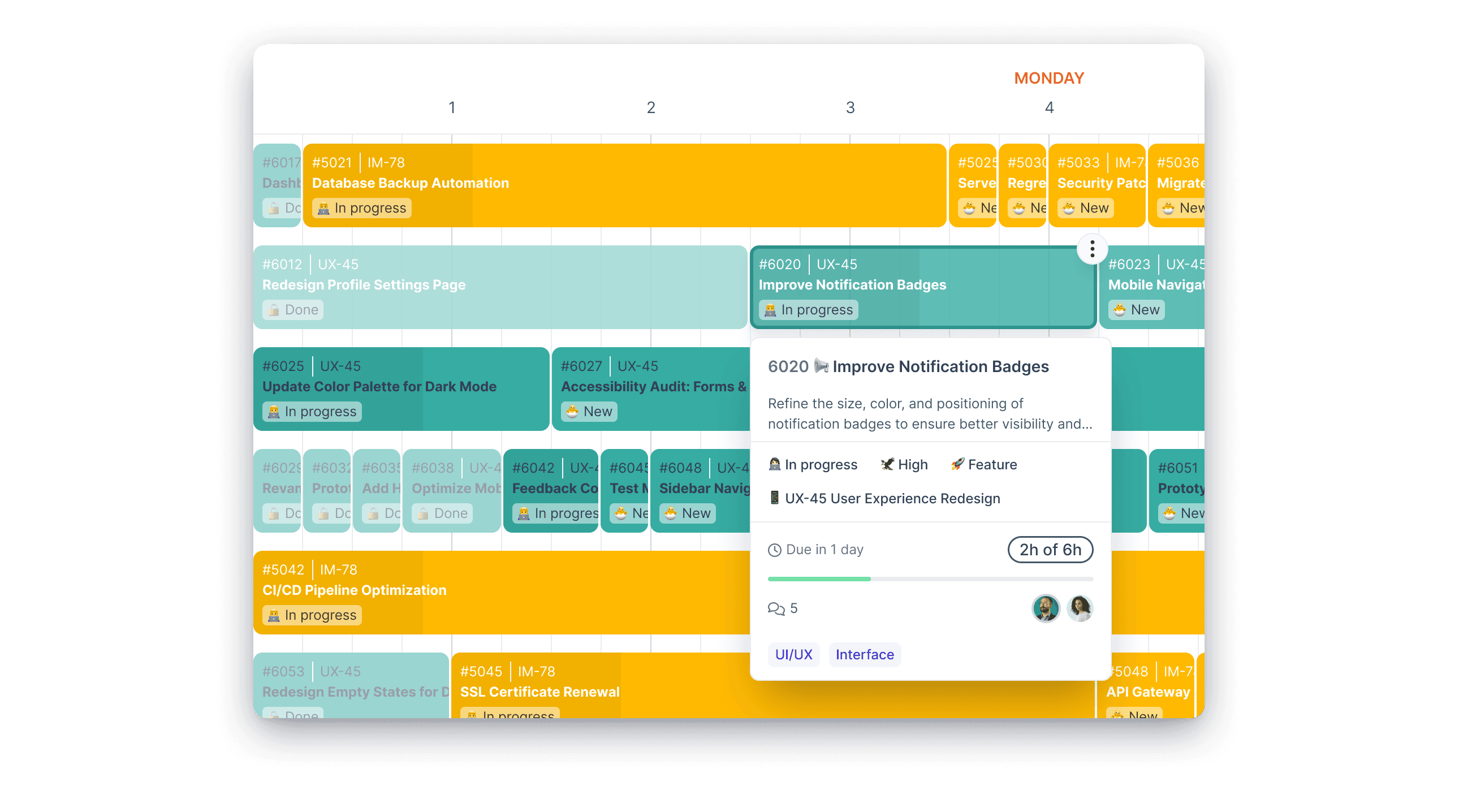
Level 3: Team Capacity – the weekly plan. Your team has 40 developer hours this week. Your top tickets need 60 hours. What fits in? What stays out? You check capacity weekly, fit in the top tickets, and the rest waits. And when a "Priority 1" hasn't started in three weeks, the system forces you to look: is the priority wrong? The capacity? The estimate?
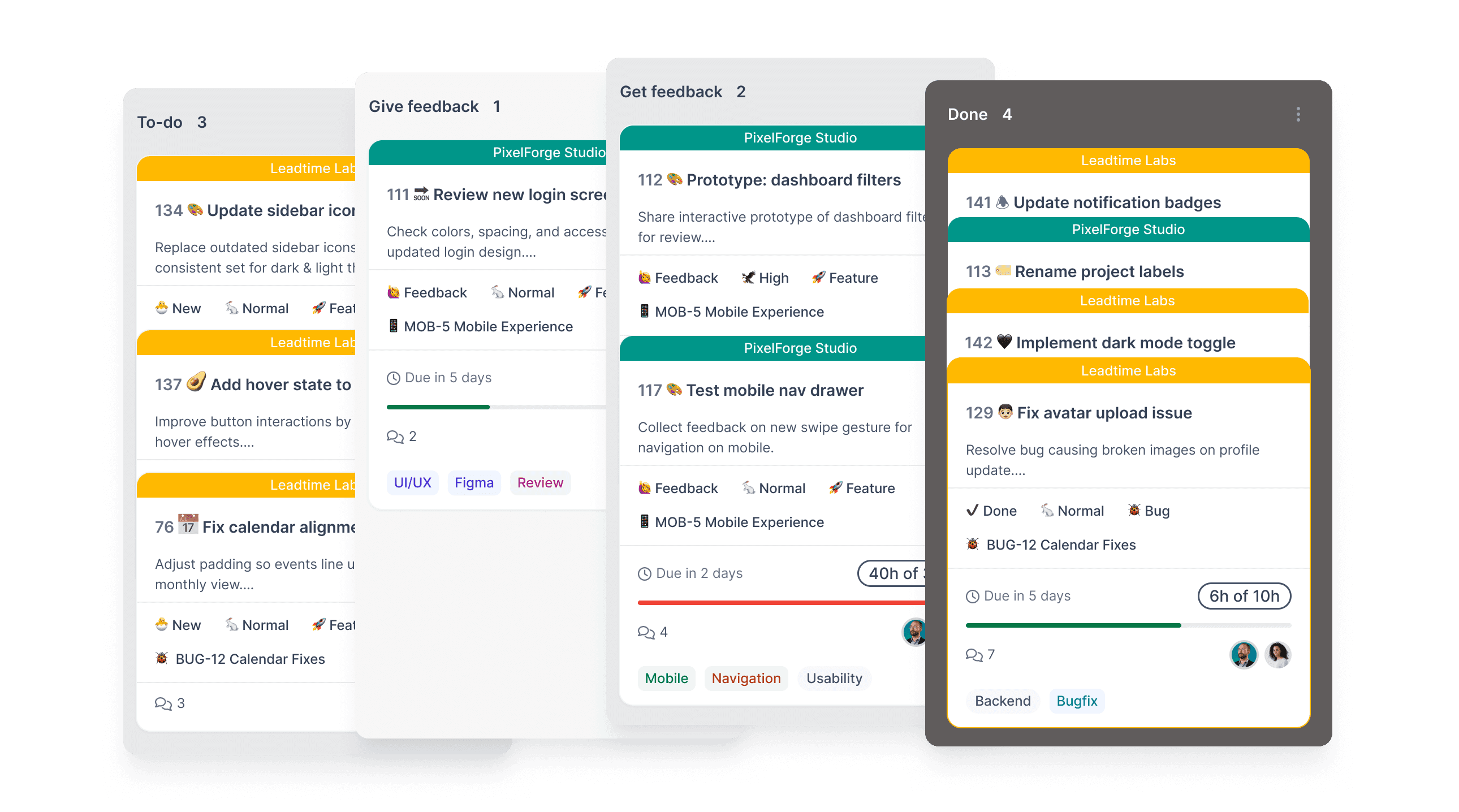
Level 4: Personal Stack – what each person does today. Every developer needs a sorted, personal work list. Not for the whole week – for today and tomorrow. A developer who knows their top three tasks works 15-20% faster, simply because context switching drops.
Monday to Friday – with a system
Monday, 9 a.m. CEO and tech lead sit down for 30 minutes. Three active projects. Project A needs a bug fix for a feature launching next week. Project B has a new customer request. Project C runs smoothly. They rank them: (1) bug fix for A, (2) customer request for B, (3) an internal optimization that's been waiting two sprints. Level 1 + Level 2. Five tickets have an order now.
Next morning, team planning. Tech lead checks the calendar – one developer on customer support, one in a client meeting. That leaves 30 hours for planned work. Items 1 and 2 fit in, plus part of 3. Level 3: the week is set.
By Tuesday afternoon, every developer has updated their Stack (Level 4). Bug fix today and tomorrow. Customer integration starting. API work if time allows. Everyone knows what comes first.
Wednesday, a call comes in – another customer request, "also urgent." Tech lead checks the Pools (Level 2). The new ticket would bump a planned one. He tells the customer: "That's two weeks out. Or we shift the integration." Not a dodge – transparency.
Friday afternoon, review. Bug fix is live. Customer integration at 70%. The internal optimization had to wait – planned that way. No surprises. Monday picks up right where things left off.

What changes when the system runs
Fewer meetings – because everyone sees the updated ranking weekly instead of constantly debating what's "urgent." The conversation already happened, transparently, visibly.
Faster decisions: a new customer needs an integration? Instead of "maybe next month," you say: "That bumps Ticket X down. Is that OK?" That's a business decision, not a vague promise.
Visible reality: you see immediately when a Priority 1 hasn't started in three weeks. That forces you to ask: is the priority wrong? Can we free up capacity? Not: "Hopefully we'll figure it out when it's already two months late."
And less context switching. Developers don't constantly decide what's next. It's already decided. That's often the difference between a team that spots delays early and one that notices them at the deadline.
Why methods alone don't cut it
The Standish Group shows: large IT projects fail over 90% of the time. Not because of bad technical skills. Because what matters on paper and what happens in practice don't run on the same rhythm. A system that syncs both – that's the difference between teams that deliver and teams that say "almost done."
It doesn't cost more. It often costs less because less time gets wasted. The only thing it costs is consistency: running the same routine every week. Nobody ranking work without the cross-project view. Accepting that not everything can happen at once.
We built Leadtime because we had this exact problem ourselves – not because we knew the answer, but because we were tired of realizing on Friday that the week had gone to the wrong things.